
How to Attract Organic Visitors Naturally for Top Rankings

Most American businesses see a dramatic rise in search traffic after improving technical website foundations. With well over half of all visitors coming from mobile devices, choosing the right architecture and targeting high intent keywords makes all the difference for global SEO teams. This guide explores proven methods to engineer an authentic traffic flow, optimize CTR parameters, and verify real user engagement, empowering professionals to drive organic growth faster than ever.
Quick summary
Step 1: Set Up SEO-Friendly Website Foundations
Building a powerful website starts with creating a foundation that search engines love. Your goal is to design an infrastructure that maximizes organic visibility and ensures smooth crawlability for search algorithms.
Start by focusing on technical elements that form the backbone of search engine optimization. Site architecture plays a critical role in how search engines understand and rank your content. This means creating a logical, hierarchical structure where pages connect intuitively and information flows seamlessly. Prioritize clean navigation menus, clear URL structures, and strategic internal linking that helps both users and search engine bots move through your website efficiently.
Mobile responsiveness is no longer optional. With over 60% of web traffic coming from mobile devices, your website must adapt perfectly across smartphones, tablets, and desktops. Use responsive design techniques that automatically adjust layout, images, and text based on screen size. Implement fast page load speeds by optimizing image sizes, minimizing complex scripts, and leveraging browser caching. Google rewards websites that deliver quick, smooth user experiences with better search rankings.
Pro tip: Use Google's PageSpeed Insights to diagnose and fix technical performance issues that could be hindering your website's search engine potential.
Step 2: Target High-Intent Keywords for Content
Unlocking organic search success requires strategic keyword targeting that connects directly with user search behaviors. Your mission is to identify and optimize content around keywords that signal strong user intent and potential conversion.

Keyword research involves distinguishing between short-tail and long-tail keywords that align with specific user search patterns. Focus on high-intent keywords that demonstrate clear commercial or informational objectives. These are phrases where users are actively seeking solutions, comparing options, or preparing to take action. For instance, keywords like "best SEO tools for small businesses" reveal more specific intent than generic terms like "SEO tools". Analyze search volume, competition levels, and potential click through rates to prioritize keywords with the strongest potential for driving targeted organic traffic.
Develop a systematic approach to keyword selection by understanding user intent across different stages of the customer journey. Break down keywords into categories like informational (seeking knowledge), navigational (looking for specific websites), and transactional (ready to purchase). Use tools like Google Keyword Planner, SEMrush, and Ahrefs to uncover hidden opportunities and long-tail variations that competitors might have overlooked. Prioritize keywords with reasonable search volume and lower competition that allow your content to rank more easily.
Pro tip: Create a keyword matrix that maps search intent, volume, and competition to systematically prioritize your content strategy and maximize organic search potential.
Below is a summary of keyword types and their strategic benefits for SEO:
Step 3: Customize CTR Parameters for Authentic Traffic
Optimizing click through rate parameters requires a strategic approach to simulate genuine user engagement and improve search engine rankings. Your objective is to create traffic signals that appear natural and compelling to search algorithms.
Modern CTR estimation techniques involve sophisticated deep learning approaches for capturing authentic user interaction patterns. Start by understanding key parameters that influence traffic quality including session duration, geographic diversity, device types, and browsing behavior. Customize your traffic generation to mirror realistic user interactions by varying click patterns, randomizing time spent on pages, and ensuring traffic originates from diverse IP addresses across different regions. This approach helps create a more organic signal that mimics genuine user interest.
Implement granular controls that allow precise customization of your traffic parameters. Focus on metrics like bounce rate, page views per session, and average time on site. Cross-platform CTR modeling provides standardized protocols for evaluating and fine-tuning traffic quality across different search environments. Utilize tools that offer granular geographic targeting, allowing you to simulate traffic from specific countries, cities, and even mobile versus desktop users. By creating multi-dimensional traffic profiles that reflect authentic user behaviors, you can more effectively manipulate search engine perception and improve organic ranking potential.
Pro tip: Rotate your traffic sources and IP addresses frequently to maintain the appearance of natural, diverse user engagement and prevent potential algorithmic detection.
Step 4: Monitor Traffic Signals and Engagement Metrics
Tracking and analyzing your website's performance requires a comprehensive approach to understanding user interactions and search engine signals. Your goal is to develop a systematic method for measuring and interpreting key engagement metrics that influence your organic search rankings.
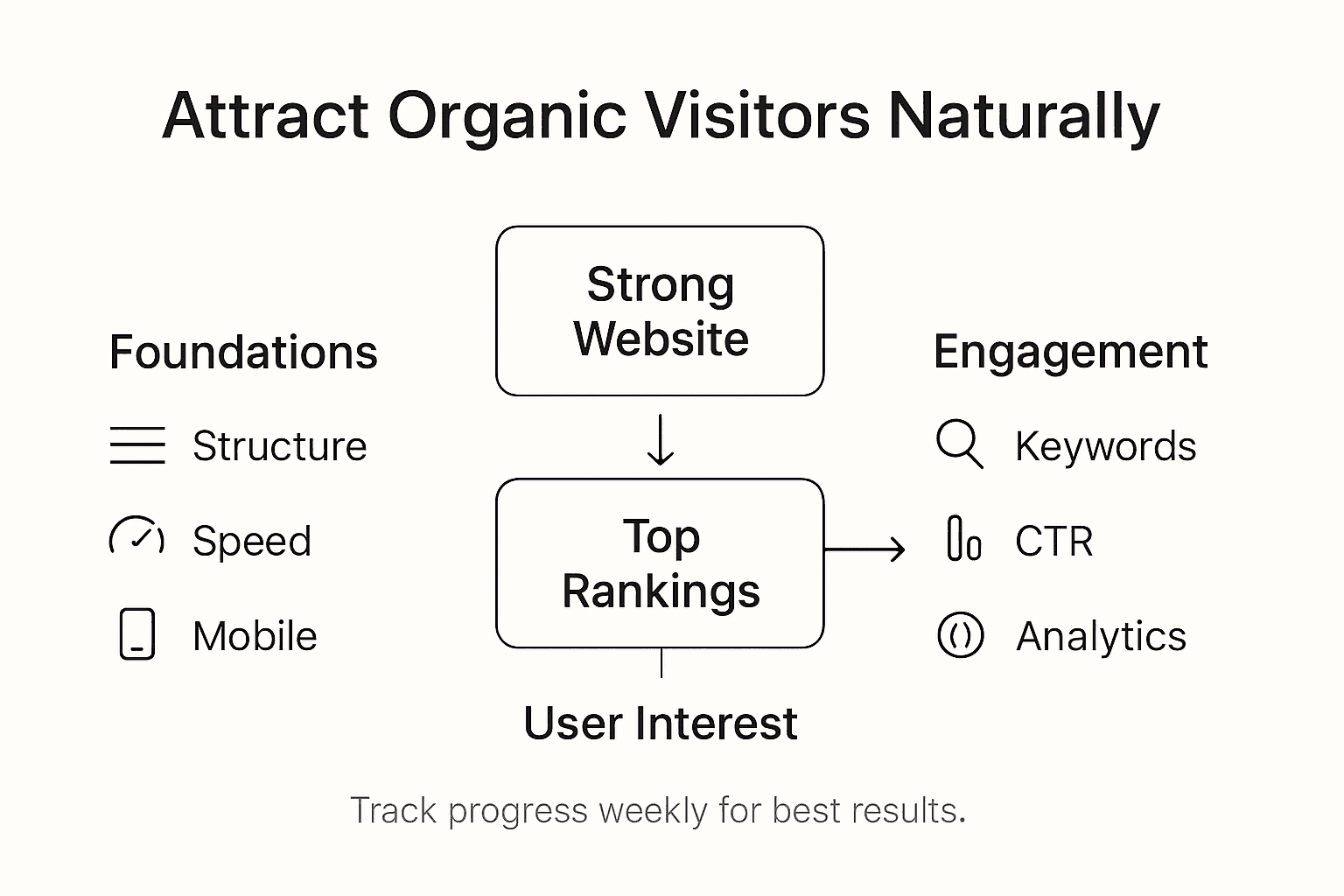
Open-source platforms provide powerful tools for aggregating and analyzing web traffic performance data, enabling you to gain deep insights into your site's organic search behavior. Focus on critical metrics such as click through rate, bounce rate, average session duration, and page views per visitor. These signals help you understand how users interact with your content and how search engines perceive your website's relevance. Pay close attention to geographic distribution of traffic, device types, and user behavior patterns that indicate genuine engagement.
Implement a multi-dimensional monitoring strategy that goes beyond surface-level analytics. Real-time visitor tracking allows you to verify the authenticity and quality of your traffic sources. Utilize advanced analytics tools that offer granular breakdowns of user interactions, including scroll depth, interaction events, and conversion pathways. Cross reference data from multiple sources like Google Search Console, Google Analytics, and specialized SEO tracking platforms to create a comprehensive view of your website's performance. Look for consistent patterns that demonstrate natural user engagement and identify areas where you can optimize your content to improve search rankings.
Pro tip: Create a weekly dashboard that compares key engagement metrics to track incremental improvements and quickly identify any anomalies in your traffic patterns.
Step 5: Verify Real Visitor Impact on SEO Rankings
Authentic visitor engagement is the cornerstone of sustainable search engine optimization strategies. Your mission is to develop a robust method for measuring genuine user interactions and understanding their direct influence on search rankings.
SEO metrics provide critical insights into how real visitor behavior directly impacts search engine performance. Analyze key performance indicators such as click through rate, bounce rate, time on page, and returning visitor frequency. These metrics reveal the depth of user engagement and help search algorithms determine your content's relevance and quality. Pay special attention to signals that demonstrate genuine user interest, such as scroll depth, interaction events, and multiple page views within a single session. Advanced visitor tracking tools enable granular analysis of user behavior and its correlation with search rankings. Develop a comprehensive approach that goes beyond surface-level metrics by creating detailed visitor profiles. Track user journeys from initial search through multiple interactions with your site. Compare behavior across different traffic sources, identifying which channels bring the most engaged visitors. Look for patterns that indicate authentic interest such as extended session durations, low bounce rates, and consistent returning visitor behavior. This nuanced approach helps you understand how real user interactions translate into improved search engine rankings.
Pro tip: Create a comparative analysis spreadsheet that tracks visitor engagement metrics alongside your search ranking improvements to identify direct correlations and optimize your SEO strategy.
Here's a quick breakdown comparing common SEO engagement metrics and how they impact search rankings:
Unlock True Organic Growth With ClickSEO.io
Struggling to attract authentic organic visitors who boost your real search rankings Can mastering CTR, bounce rate, and session duration seem overwhelming The article outlines the crucial challenge of generating genuine user engagement that search engines recognize as natural and valuable. You want to move beyond generic traffic and unreliable signals toward customized, geo-targeted visits that elevate your site’s authority and rankings.
ClickSEO.io offers the perfect solution by harnessing a proprietary CTR bot designed to simulate real user behavior using over 87 million genuine IP addresses from 170+ countries. Our platform lets you tailor key parameters like daily clicks, session lengths, and geolocation to craft natural-looking traffic profiles that dramatically improve your SEO signals. This means better click-through rates, lower bounce rates, and longer dwell times, all positively influencing Google’s ranking factors with measurable results.
Imagine making the jump from page 4 to the first page of Google in less than two months with traffic that search engines perceive as truly authentic. To discover how you can accelerate your website’s organic growth using strategies aligned with the principles in How to Attract Organic Visitors Naturally for Top Rankings, explore all the features available at ClickSEO.io.
Increase your rankings today with a traffic generation method that mimics real visitors and powers up your organic visibility.

Ready to transform your SEO strategy and see real improvements in your Google rankings Start your journey now at ClickSEO.io and experience the difference authentic, adaptable traffic can make
Frequently Asked Questions
How can I create an SEO-friendly website structure to attract organic visitors?
To attract organic visitors, design a logical, hierarchical site structure with intuitive navigation. Ensure that your URLs are clean and implement strategic internal linking to improve crawlability and user experience.
What types of keywords should I target for organic traffic?
Focus on high-intent keywords that reflect specific user intentions, such as transactional or informational phrases. Use a mix of short-tail and long-tail keywords to capture different stages of the customer journey, and prioritize those with reasonable search volume and low competition.
How do I optimize my click-through rate to improve search rankings?
Improving your click-through rate involves creating compelling titles and descriptions that entice users to click. Experiment with different headlines and meta descriptions, aiming for a higher engagement rate on your search results.
What metrics should I monitor to gauge my organic traffic success?
Key metrics to track include click-through rate, bounce rate, average session duration, and returning visitor frequency. Analyze these engagement metrics regularly to identify trends and areas for improvement, such as decreasing bounce rate by 15% in the next month.
How can I verify the impact of real visitor engagement on my site's SEO rankings?
Validate the influence of genuine user engagements by comparing your engagement metrics with search ranking changes. Track metrics like session duration and bounce rate to understand their correlation with your rankings, and reassess your strategy if necessary.
Recommended