
7 Essential SEO Ranking Factors 2026 Every Marketer Must Know

Most American SEO professionals notice that over 80 percent of organic search success now depends on aligning content with evolving user intent and engagement signals. As digital marketing shifts rapidly, mastering advanced CTR techniques and understanding new ranking factors for 2026 has become essential for staying competitive. This guide shares practical strategies to build intelligent content ecosystems, optimize for machine learning-driven algorithms, and achieve lasting authority in North American search results.
Quick Summary
1. User Intent and Content Relevance
The future of SEO centers on understanding and delivering precise user intent through intelligent content strategies. As search evolves beyond traditional keyword matching, marketers must reimagine content creation through the lens of user needs and AI-powered discovery.
In 2026, search experiences will dramatically transform from linear queries to sophisticated, conversational interactions. Search platforms now prioritize personalized, intent-driven results that go far beyond simple keyword optimization. This means your content must anticipate user questions, address specific pain points, and provide comprehensive, semantically rich information.
Successful SEO now requires building content ecosystems that map directly to user personas and behavioral patterns. Instead of stuffing articles with keywords, you must craft assets that genuinely answer user questions across multiple touchpoints. This demands deep audience research, understanding search context, and creating adaptable content that resonates across different platforms and search modes.
To align with these emerging search dynamics, focus on developing multimodal content that serves various user intents. This includes creating text, video, audio, and interactive formats that can be easily interpreted by AI search algorithms. Your goal is to make content machine-readable while maintaining a natural, conversational tone that speaks directly to human readers.
Earning authority through comprehensive, intent-matched content will be critical. This means going beyond traditional backlink strategies and building credibility through social signals, brand mentions, and genuinely helpful information.
Pro Tip: Develop a detailed user intent matrix mapping out potential search scenarios, questions, and content formats to ensure your digital assets comprehensively address audience needs across different discovery pathways.
2. Advanced CTR Optimization Techniques
Click-through rate optimization has become a sophisticated science in 2026, transforming how marketers approach search engine visibility. Understanding and strategically improving your content's ability to attract user clicks is now a critical component of search ranking success.
Successful CTR optimization requires a multifaceted approach that goes beyond traditional keyword targeting. Modern search algorithms prioritize user engagement signals, meaning your content must not just match search intent but actively compel users to click. This involves crafting compelling titles, meta descriptions, and content previews that stand out in increasingly competitive search results.
The core strategy involves behavioral psychology principles combined with data driven testing. This means analyzing your current performance, understanding competitor strategies, and systematically improving click-through metrics. Your goal is to create search listings that trigger immediate user interest through strategic word choices, emotional triggers, and clear value propositions.
Key techniques include using powerful emotional trigger words, creating curiosity gaps in your titles, and ensuring your meta description provides a concise yet enticing preview of the content. Think of your search listing as a mini marketing campaign that must capture attention in less than a second. Every word matters.
Practical implementation requires continuous experimentation. You should track your current CTR, test multiple title variations, analyze which phrases generate more clicks, and refine your approach based on real user behavior. Advanced marketers use AI tools to help predict and optimize these engagement signals.
Some specific optimization strategies include using numbered lists, power words that evoke curiosity, addressing specific user pain points, and creating titles that promise clear, actionable value. The most successful search listings feel like they are speaking directly to the user's specific needs and challenges.
Pro Tip: Develop a systematic A/B testing approach for your search listings, changing one variable at a time and tracking incremental improvements in click-through rates to build a data driven optimization strategy.
3. Geo-Targeted Traffic Signals
Geo-targeted traffic signals represent the next frontier of search engine optimization, transforming how businesses capture local and regional audience attention. In 2026, successful SEO strategies demand a sophisticated approach to location based digital marketing that goes far beyond traditional local search tactics.
Generative Engine Optimization (GEO) represents a critical evolution in search strategy, where content must be optimized not just for traditional search engines but for AI powered discovery platforms. This means creating hyper relevant, location specific content that speaks directly to regional audience needs and search behaviors.
Modern geo targeting requires a multifaceted approach. Key elements include accurate business listings, consistent name address and phone (NAP) information, mobile responsive design, and sophisticated schema markup that helps AI understand your local context. Businesses must build digital footprints that are not just searchable but immediately trustworthy and contextually relevant.
Practical implementation involves developing content ecosystems that map precisely to local search intent. This means creating landing pages tailored to specific neighborhoods, developing content that reflects regional language patterns, and ensuring your digital presence reflects hyperlocal nuances. Advanced marketers will use AI tools to analyze neighborhood level search behaviors and create targeted content strategies.
Local AI powered SEO strategies now emphasize building rich entity based content that can be easily retrieved across multiple search surfaces. Your goal is creating digital assets that are simultaneously global in reach and deeply local in specificity.
The most successful geo targeted strategies will combine traditional local SEO techniques with AI powered insights. This means continuously monitoring your visibility across conversational search platforms, social media, and marketplace discovery channels. Your content must be flexible enough to appear authentic and relevant across multiple digital environments.
Pro Tip: Develop a hyperlocal content matrix that maps your business offerings against neighborhood level search behaviors, creating targeted content that speaks directly to specific regional audience segments.
4. Dwell Time and Visitor Engagement
Dwell time represents the critical metric that measures user interaction quality and content relevance in modern search algorithms. In 2026, engagement signals have become far more sophisticated than simple click tracking.
Search engines now use advanced machine learning models that analyze nuanced user behavior beyond traditional metrics. Visitor engagement goes far deeper than pageviews or time on site. These algorithms assess the quality of interaction through complex signals like scroll depth, interaction patterns, content consumption, and contextual relevance.
Increasing dwell time on your website requires a strategic approach to content design and user experience. Your digital assets must not just attract visitors but compel them to stay, explore, and meaningfully interact with your content.
Successful engagement strategies in 2026 involve creating multi format content experiences that cater to different learning styles and attention spans. This means developing content that includes interactive elements, rich media, dynamic visualizations, and personalized information pathways that adapt to individual user behaviors.
Practical implementation demands a holistic approach. Design your website with clear visual hierarchies, intuitive navigation, and content chunks that are easy to consume. Break complex information into digestible segments, use compelling headlines, incorporate multimedia elements, and create clear value propositions that keep users curious and engaged.
Advanced marketers will leverage AI driven personalization tools that dynamically adjust content presentation based on real time user interactions. Your goal is creating a digital experience that feels tailored, responsive, and inherently valuable to each individual visitor.
Pro Tip: Develop a content strategy that prioritizes depth and interactivity by creating modular content assets with multiple entry points, interactive elements, and clear pathways for deeper exploration.
5. Mobile-First and Core Web Vitals
Mobile optimization has transformed from a recommended strategy to an absolute necessity in 2026's digital ecosystem. Search engines now prioritize websites that deliver seamless mobile experiences as the primary benchmark for ranking performance.
Core Web Vitals represent the critical performance metrics that determine how users experience your website across mobile devices. These technical signals measure loading speed, interactivity, and visual stability through sophisticated algorithms that assess user experience in real time.
Modern websites must focus on three primary performance indicators. Largest Contentful Paint (LCP) measures loading performance by tracking how quickly the main content becomes visible. First Input Delay (FID) evaluates interactivity by assessing how rapidly the site responds to user interactions. Cumulative Layout Shift (CLS) monitors visual stability by tracking unexpected layout movements during page rendering.
Practical mobile optimization requires a comprehensive approach that goes beyond traditional responsive design. Your website must dynamically adapt to different screen sizes while maintaining lightning fast performance. This means optimizing images, minimizing server response times, leveraging browser caching, and implementing efficient coding practices that prioritize mobile user experience.
Advanced marketers understand that mobile optimization is not just about technical performance but about creating intuitive digital experiences. Your content must load quickly, be easily readable on smaller screens, feature touch friendly navigation, and provide immediate value to users with minimal friction.
Implementation strategies include using responsive design frameworks, compressing multimedia assets, eliminating render blocking resources, and continuously monitoring performance through professional web development tools. Regular performance audits and iterative improvements are essential to maintaining competitive mobile experiences.
Pro Tip: Implement a quarterly mobile performance audit using professional tools to proactively identify and resolve potential user experience bottlenecks before they impact your search rankings.
6. Quality Backlinks and Link Diversity
Backlink strategies have undergone a dramatic transformation in 2026, moving far beyond simple quantity based approaches to a sophisticated ecosystem of digital credibility and topical authority. Modern search algorithms demand nuanced, strategic link building that reflects genuine expertise and contextual relevance.
Backlink quality now represents a complex trust signal that goes well beyond traditional PageRank metrics. Search engines evaluate links through multidimensional lenses including editorial context, domain authority, topical alignment, and the overall digital reputation of linking sources.
Successful link diversity requires a strategic multichannel approach. This means cultivating backlinks from various respected domains across different industries and platforms. Academic publications, industry journals, authoritative blogs, and niche specialty websites all contribute to building a robust and credible link profile.
AI driven search technologies now consider co citations and contextual mentions as critical ranking signals. Your goal is not just acquiring links but becoming a referenced entity within trusted digital ecosystems. This demands creating genuinely valuable content that organically attracts high quality editorial links.
Practical implementation involves developing a comprehensive link acquisition strategy that prioritizes relevance over volume. Focus on creating exceptional content that naturally attracts links, building relationships with industry thought leaders, and positioning your digital assets as authoritative resources within your specific domain.
Advanced marketers understand that link building in 2026 is about storytelling and genuine value creation. Develop content that solves complex problems, offers unique insights, and provides actionable knowledge that compels other authoritative sources to reference your work.
Pro Tip: Develop a quarterly content and link audit strategy that systematically evaluates your backlink profile, identifies emerging linking opportunities, and removes low quality or potentially harmful links.
7. AI-Driven SEO and Content Personalization
Artificial intelligence has revolutionized SEO strategies, transforming how digital marketers create and distribute content in 2026. Modern SEO demands intelligent, adaptive content ecosystems that dynamically respond to individual user behaviors and preferences.
AI powered personalization represents the cutting edge of digital marketing, enabling websites to deliver hyper targeted experiences that feel uniquely crafted for each visitor. This goes far beyond traditional segmentation by using machine learning algorithms that analyze user interactions in real time.
Search box optimization strategies now leverage sophisticated AI technologies to predict and understand user intent with unprecedented accuracy. Your content must become a living, breathing entity that adapts instantly to individual user needs, learning and evolving with each interaction.
Successful AI driven personalization requires building intelligent content architectures that can dynamically adjust presentation, depth, and format based on user signals. This means creating modular content assets that can be reassembled in real time, providing personalized learning pathways that feel intuitive and engaging.
Practical implementation involves developing robust data collection strategies, building sophisticated machine learning models, and creating flexible content frameworks. Your goal is to create digital experiences that feel simultaneously personal and universally relevant, anticipating user needs before they fully articulate them.
Advanced marketers will integrate AI technologies across multiple touchpoints. This includes dynamically generated meta descriptions, personalized search snippets, adaptive content recommendations, and intelligent user journey mapping that transforms traditional linear content consumption models.
Pro Tip: Develop a comprehensive AI content personalization framework that includes continuous learning mechanisms, allowing your digital assets to evolve and improve their targeting capabilities with each user interaction.
Below is a comprehensive table summarizing the key trends and strategic insights for advancing SEO practices discussed in the article.
Focus AreaKey InsightsStrategic ActionsUser Intent and Content RelevanceTransitioning to conversational interactions and intent-driven results enhances content relevance.Develop multimodal content to match user intents across various formats.Advanced CTR Optimization TechniquesMaximizing click-through rates via engaging meta content and behavioral psychology is essential.Use compelling titles and perform systematic A/B testing.Geo-Targeted Traffic SignalsOptimizing regional content for AI-powered discovery platforms improves local engagement.Build local-specific content ecosystems and monitor visibility in conversational platforms.Dwell Time and Visitor EngagementEnhancing user engagement metrics leads to improved content relevance and rankings.Design dynamic, interactive, and personalized content experiences.Mobile-First and Core Web VitalsMobile optimization and focusing on user experience metrics are critical.Regularly audit mobile performance and align website's design with user behavior.Quality Backlinks and Link DiversityBuilding credibility and topical alignment in backlinks boosts authority.Focus on relevance, create valuable content, and sustain editorial links.AI-Driven SEO and Content PersonalizationLeveraging AI for tailored user experiences elevates engagement and relevance.Develop modular content and facilitate adaptable user pathways through intelligent content architectures.
Boost Your SEO Ranking with Targeted CTR and Engagement Strategies
The "7 Essential SEO Ranking Factors 2026 Every Marketer Must Know" article highlights the growing importance of user behavior signals such as click-through rate, dwell time, and geo-targeted traffic to climb Google’s ranks. If you are striving to overcome challenges like low CTR or short visitor engagement, leveraging authentic and customizable traffic sources is critical. Your SEO success depends on driving real, intent-driven clicks that positively influence Google’s algorithm and enhance content relevance.
ClickSEO.io specializes in exactly this—delivering genuine, geo-targeted visitors that simulate real user behavior with customizable options for session duration and click volume. This approach helps improve crucial ranking factors such as bounce rate and dwell time while maintaining a natural traffic profile trusted by search engines. By combining advanced CTR optimization with hyperlocal targeting and authentic IP diversity, you can accelerate your climb to the first page of Google rankings and secure measurable gains.
Click Here to Discover ClickSEO.io
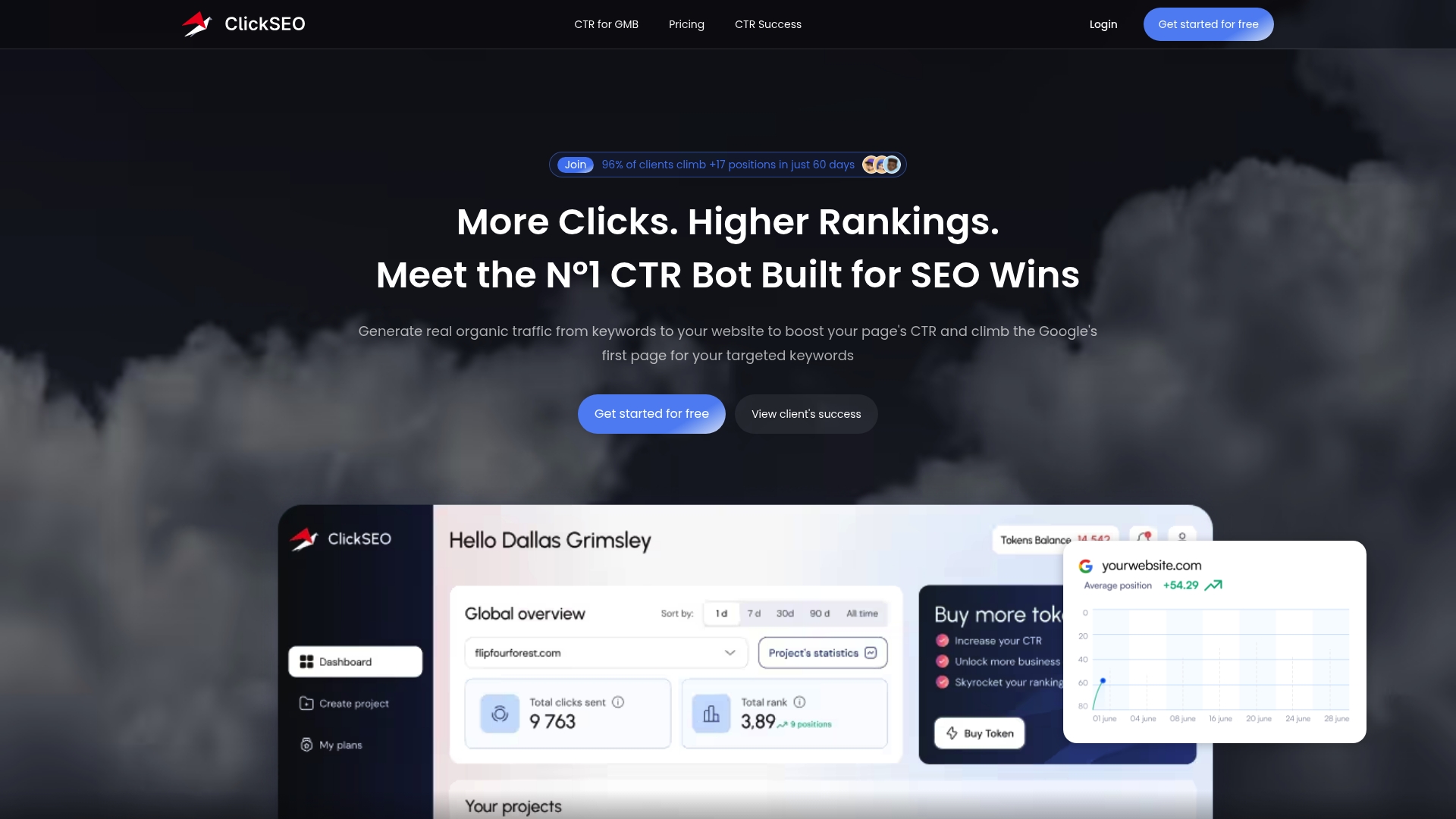
Take control of your SEO performance today. Use our proprietary CTR bot to boost your rankings with authentic organic traffic designed to improve engagement and search visibility. Don’t let your carefully crafted content go unnoticed. Visit ClickSEO.io now to start transforming your SEO strategy with targeted, data-driven traffic solutions.
Frequently Asked Questions
What are the key SEO ranking factors to focus on in 2026?
The key SEO ranking factors in 2026 include user intent, click-through rate optimization, geo-targeted content, dwell time, mobile-first design, link diversity, and AI-driven content personalization. Focus on creating content that genuinely addresses user needs while optimizing for mobile usability.
How can I improve my click-through rate for search results?
To improve your click-through rate, craft compelling titles and meta descriptions that engage users instantly. Experiment with different wording and monitor your results; consider launching A/B tests to identify which variations yield higher clicks within 30 days.
What strategies can I use for effective geo-targeted SEO?
Implement geo-targeted SEO by creating location-specific content that reflects local audience needs and search behaviors. Develop dedicated landing pages for key neighborhoods and utilize accurate business listings to enhance local trust and visibility.
How does dwell time impact search rankings and how can I increase it?
Dwell time impacts search rankings as it indicates user engagement quality. To increase dwell time, design your website with intuitive navigation and engaging content formats; aim to provide clear value and promote deeper exploration, boosting interaction rates significantly.
What are Core Web Vitals and why are they important?
Core Web Vitals are essential performance metrics that measure loading speed, interactivity, and visual stability of a website. Focus on optimizing these aspects to enhance user experience; aim for a Largest Contentful Paint score of under 2.5 seconds for optimal performance.
How can I build quality backlinks effectively in 2026?
To build quality backlinks, create exceptional content that naturally attracts references from authoritative sources. Focus on storytelling and providing valuable insights, aiming to cultivate relationships with industry thought leaders to enhance your link profile over time.
Recommended