
What Is Organic Traffic and Why It Matters

Most American e-commerce sites are missing out on the power of organic traffic, even though over 53 percent of web visits worldwide start with an organic search. For SEO consultants and digital marketers, mastering organic traffic is the difference between steady growth and fading visibility. This deep dive uncovers common misconceptions, reveals the real drivers behind organic ranking, and outlines practical strategies for capturing and engaging high-intent visitors.
Key Takeaways
Organic Traffic Defined and Common Myths
Organic traffic represents website visitors who arrive through unpaid search engine results, social media platforms, and natural discovery channels. Unlike paid advertising strategies, organic traffic channels deliver sustainable visitor growth without continuous financial investment. These visitors find websites through genuine search intent, content relevance, and search engine optimization (SEO) strategies.
The fundamental distinction between organic and paid traffic lies in its acquisition method. Search engines like Google rank websites based on complex algorithms that evaluate content quality, relevance, user experience, and numerous technical factors. Authentic organic traffic emerges from strategic content development, keyword optimization, and creating valuable resources that genuinely answer user questions. This approach contrasts sharply with paid traffic models that require ongoing financial expenditure to maintain visitor streams.
Several persistent myths often misrepresent organic traffic generation. Many digital marketers incorrectly assume that organic traffic can be achieved quickly or without significant effort. In reality, building meaningful organic traffic requires consistent content strategy, technical SEO expertise, and a deep understanding of target audience search behaviors. Another common misconception is that organic traffic automatically translates to high conversion rates—while organic visitors often demonstrate higher intent, conversion still depends on website design, content quality, and user experience.
Pro tip: Invest consistently in high-quality, targeted content that directly addresses specific user search queries, and monitor your organic traffic performance using advanced analytics tools to refine your strategy.
Types of Organic Website Visitors Explained
Organic website visitors represent diverse user segments that discover websites through natural, unpaid channels. Different types of organic traffic sources demonstrate unique characteristics and search behaviors, requiring tailored digital marketing strategies to effectively engage each group. These visitors fundamentally arrive through search engines, referral links, social platforms, and direct brand recognition.
Search engine organic visitors constitute the most significant category, comprising users who discover websites by entering specific keywords and queries. These visitors typically demonstrate high intentionality, actively seeking information, solutions, or products related to their search terms. Another substantial organic visitor segment includes those arriving through image and video search results, which represent increasingly important discovery pathways as visual content becomes more prominent in search algorithms.

Referral traffic represents another critical organic visitor type, where users navigate to a website through links embedded on other platforms. These might include industry blogs, news sites, professional forums, or educational resources that reference and link to your content. Organic visitors from diverse sources like search, images, and referral links require nuanced content strategies to effectively capture and retain their attention. Social media platforms also contribute significantly to organic traffic, with users discovering websites through shared content, discussions, and community engagement.
Pro tip: Develop a comprehensive content strategy that targets multiple organic visitor types by creating diverse, high-quality content across text, image, and video formats to maximize your website's discoverability.
Here's a summary of the main types of organic website visitors and their distinguishing traits:
How Search Engines Drive Organic Traffic
Search engines function as sophisticated digital gatekeepers, systematically indexing and ranking web content through complex algorithmic processes. These intricate systems employ automated web crawlers that continuously scan internet landscapes, evaluating websites based on hundreds of nuanced ranking signals. Web crawlers methodically analyze webpage content, structure, relevance, and external connections to determine how prominently a site should appear in search results.

The ranking mechanism involves multiple critical components beyond simple keyword matching. Search algorithms consider factors like content quality, user engagement metrics, website loading speed, mobile responsiveness, and the credibility of external links pointing to a webpage. Websites that demonstrate expertise, authoritativeness, and trustworthiness receive higher organic ranking potential. This means content creators must focus not just on keywords, but on developing comprehensive, valuable resources that genuinely address user queries and provide meaningful information.
Technical optimization plays a crucial role in how search engines interpret and rank web content. Website owners must implement strategic search engine optimization (SEO) techniques that help crawlers efficiently understand and index their pages. This includes creating clear site architectures, using appropriate HTML tags, ensuring fast page load times, implementing schema markup, and developing high-quality, original content that answers specific user questions. The more effectively a website communicates its purpose and value to search engine algorithms, the higher its potential for generating consistent organic traffic.
Pro tip: Develop a holistic SEO strategy that balances technical optimization, high-quality content creation, and user experience to maximize your website's organic search visibility.
Impact of Organic Traffic on SEO Rankings
Organic traffic plays a crucial role in determining search engine rankings, creating a dynamic and interconnected relationship between website visibility and user engagement. Search engines like Google use sophisticated algorithms that evaluate not just the quantity of organic visitors, but the quality of their interactions with a website. Ranking signals emerge from multiple user behaviors, including click-through rates, time spent on site, and the depth of page exploration.
The interaction between organic traffic and SEO rankings operates as a complex feedback loop. Websites that attract more engaged visitors tend to receive higher search result placements, which in turn generates additional organic traffic. Search engines interpret consistent user engagement as a strong indicator of content relevance and quality. This means that websites demonstrating high user interaction metrics—such as low bounce rates, multiple page views, and longer session durations—are more likely to climb search result rankings and attract even more organic visitors.
Beyond basic traffic metrics, search engines now incorporate advanced ranking factors that assess the comprehensive user experience. These include mobile responsiveness, page loading speed, content depth, and the presence of rich media elements like videos and interactive graphics. Websites that optimize these technical and content-related aspects while maintaining high-quality, relevant information are more likely to achieve sustained organic search visibility. The goal is not just to attract visitors, but to provide a seamless, valuable experience that encourages continued exploration and engagement.
Pro tip: Focus on creating comprehensive, user-focused content that addresses specific audience needs while maintaining technical SEO best practices to improve your website's organic search performance.
Compare the impact of key user engagement metrics on SEO rankings:
Risks and Missteps When Boosting Organic Traffic
Digital marketers frequently encounter potential pitfalls when attempting to boost organic traffic, with many strategies inadvertently harming long-term search engine performance. The most critical risks emerge from adopting short-sighted tactics that prioritize immediate gains over sustainable growth. Search engine algorithms continuously evolve, punishing websites that employ manipulative techniques designed to artificially inflate traffic metrics without providing genuine user value.
One of the most significant risks involves creating generic, keyword-stuffed content that fails to address authentic user needs. Search engines have become increasingly sophisticated at detecting low-quality content designed purely for ranking manipulation. Websites that produce shallow, repetitive, or poorly researched articles risk not just diminished rankings, but potential penalties that can dramatically reduce their search visibility. Successful organic traffic strategies require a holistic approach that balances technical optimization with high-quality, user-focused content that genuinely answers audience questions and solves specific problems.
Technical missteps can also severely compromise organic traffic potential. Common errors include neglecting website performance metrics like page loading speed, mobile responsiveness, and structured data implementation. Modern search algorithms prioritize user experience, meaning websites with poor technical foundations will struggle to achieve meaningful organic visibility. Digital marketers must invest in comprehensive technical SEO audits, addressing issues like broken links, improper redirects, inefficient site architectures, and suboptimal mobile experiences that can undermine organic traffic generation efforts.
Pro tip: Conduct quarterly comprehensive content and technical SEO audits to identify and proactively address potential performance limitations before they negatively impact your organic search rankings.
Elevate Your Organic Traffic With Proven SEO Solutions
Building authentic organic traffic is essential but challenging as highlighted in the article "What Is Organic Traffic and Why It Matters." You understand the importance of improving key SEO signals like click-through rate, bounce rate, and dwell time for better Google rankings. The struggle to consistently attract genuine visitors who engage deeply and improve your site metrics can be frustrating and slow without the right tools.
ClickSEO.io offers a cutting-edge digital marketing platform specially designed to tackle these exact challenges. Our proprietary CTR bot delivers realistic, geo-targeted visitors from search engine results pages (SERPs) using over 87 million genuine IPs worldwide. This approach ensures your organic traffic growth is both natural and SEO-safe helping you climb Google ranks rapidly while enhancing user engagement metrics critical for sustained success.
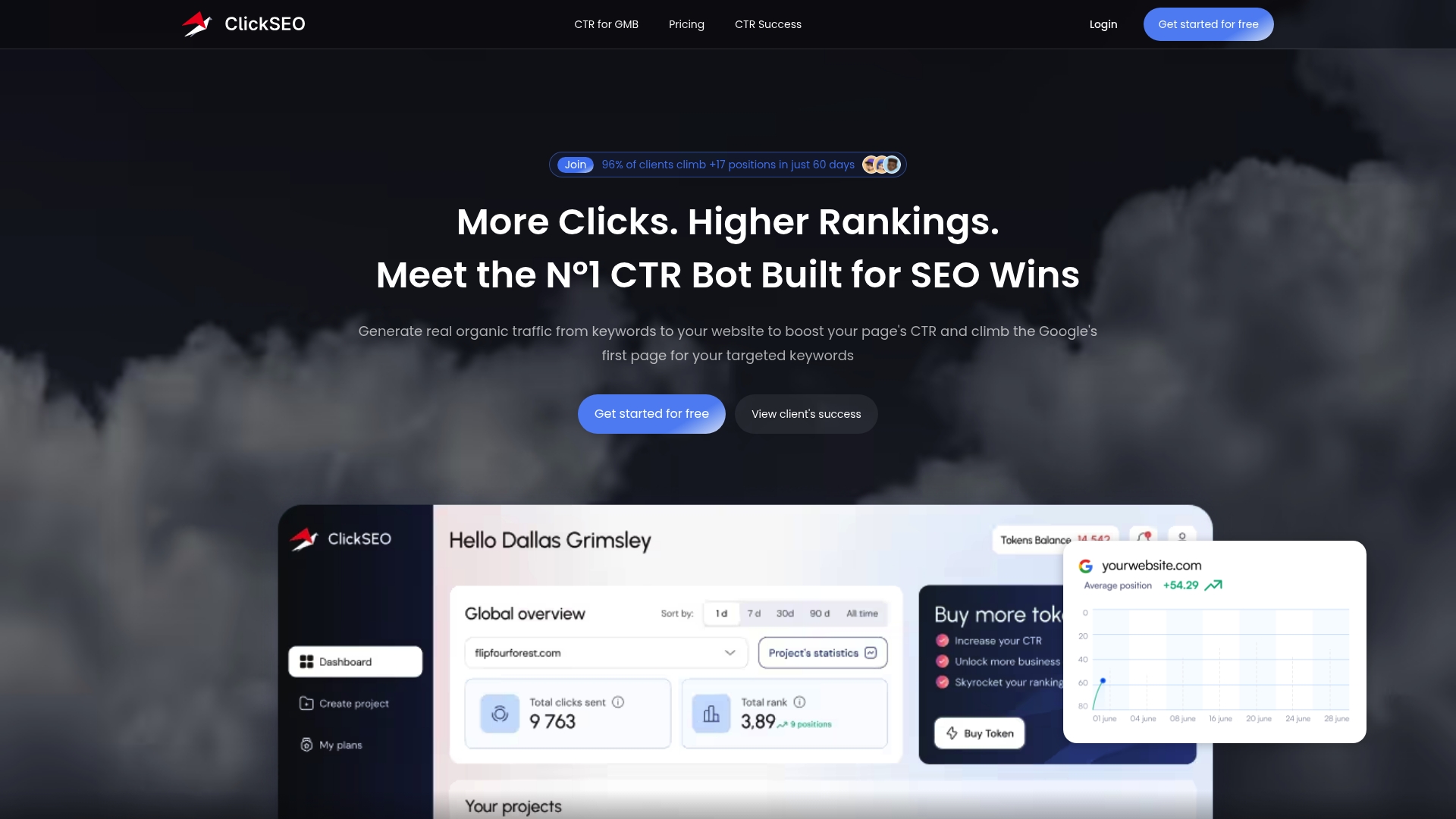
Ready to transform your website's SEO performance using authentic, customizable traffic that makes a measurable impact? Discover how ClickSEO.io can help you boost organic rankings fast with strategies aligned to Google’s algorithm. Don’t wait to harness a powerful, positive signal manipulation technique proven to move websites from the 44th to the 15th rank in under two months. Visit ClickSEO.io now and start your journey to organic growth and higher visibility today.
Frequently Asked Questions
What is organic traffic?
Organic traffic refers to website visitors who arrive through unpaid search engine results and natural discovery channels, rather than through paid advertising.
How can I improve my website's organic traffic?
To enhance organic traffic, focus on high-quality, targeted content that addresses user search queries, optimize for relevant keywords, and ensure a seamless user experience through technical SEO practices.
Why is organic traffic important for my website?
Organic traffic is crucial because it represents sustainable visitor growth without ongoing financial investment, provides high-intent users actively seeking information, and contributes positively to overall SEO rankings.
What are common myths about organic traffic generation?
Common myths include the belief that organic traffic can be gained quickly without effort and the notion that more organic traffic automatically leads to higher conversion rates. In reality, building organic traffic requires consistent strategy and quality content.
Recommended
- Fake Website Traffic: Where to Buy & Real Alternatives
- ClickSEO | Buy organic traffic from Cocos (Keeling) Islands | Get Web Traffic NOW
- ClickSEO | Buy organic traffic from Antarctica | Get Web Traffic NOW
- ClickSEO | Buy organic traffic from British Indian Ocean Territory | Get Web Traffic NOW