
Why Optimize for Google: Boost Traffic, Trust, ROI

Over 90 percent of searchers choose Google, leaving most american businesses fighting for a small group of top spots. For SEO agency owners tasked with rapid client results, the difference between page one and obscurity comes down to understanding how Google rewards genuine authority and experience. This guide uncovers proven approaches that drive authentic rankings while keeping every american client compliant and positioned for steady digital growth.
Key Takeaways
Why Optimizing for Google Matters
Search engine optimization represents a critical strategy for businesses seeking digital visibility and growth. Organic search drives 53% of all website traffic, making Google optimization not just beneficial, but essential for modern digital success. With Google commanding an overwhelming 91.94% of the search engine market, understanding how to rank effectively can transform a website's potential.
The stakes are high for businesses competing in digital spaces. Achieving a top organic search position translates directly into substantial traffic opportunities. Research indicates that the top search result receives an impressive 34.2% click-through rate, which means strategic optimization can dramatically increase website visibility and potential customer engagement. By understanding and implementing Google's complex ranking algorithms, businesses can dramatically improve their digital presence and attract high-quality organic traffic.
Successful Google optimization goes beyond simple keyword placement. Search engine optimization strategies enhance content visibility and user engagement, requiring a comprehensive approach that considers technical performance, content quality, and user experience. Modern SEO demands a holistic strategy that includes technical website optimization, creating high-quality relevant content, building authoritative backlinks, and continuously monitoring performance metrics.
Pro Tip: Strategic Optimization Focus: Concentrate on creating genuinely valuable content that answers user questions comprehensively while ensuring your website loads quickly and provides an excellent mobile experience.
Organic Traffic Benefits and ROI
Organic traffic represents the most sustainable and cost-effective digital marketing strategy for businesses seeking long-term growth. Understanding the enduring value of organic traffic reveals significant financial advantages that extend far beyond traditional advertising models. Unlike paid advertising, which requires constant financial investment, organic traffic builds momentum through strategic content development and search engine optimization.
The financial implications of organic traffic are profound. Businesses investing in search engine optimization can expect compounding returns over time, with traffic generated through organic search often converting at higher rates than other digital channels. This approach reduces customer acquisition costs and creates a more predictable revenue stream. High-quality organic traffic signals strong brand credibility, as users inherently trust websites that rank naturally in search results rather than those relying solely on paid placements.
Building a robust organic traffic strategy requires comprehensive planning and continuous optimization. Successful implementations involve creating high-quality, relevant content, improving website technical performance, developing authoritative backlink profiles, and maintaining consistent engagement with target audiences. By focusing on delivering genuine value to users, businesses can develop a sustainable digital marketing approach that generates consistent traffic without recurring advertising expenses.
Pro Tip: Organic Growth Strategy: Prioritize creating in-depth, original content that genuinely answers user questions while systematically improving your website's technical SEO performance and user experience.
The following table compares organic and paid traffic to highlight their long-term value for businesses:
How Google Ranks Your Website
Search engine algorithms utilize complex mechanisms to evaluate and rank websites, analyzing hundreds of sophisticated ranking signals that determine content visibility. Google's intricate ranking process involves automated web crawlers that systematically explore digital content, collecting and indexing information from millions of web pages. These algorithmic systems assess multiple factors including content relevance, website authority, user experience, and technical performance to determine search result positioning.

The ranking process extends far beyond simple keyword matching. Modern search algorithms incorporate advanced machine learning techniques to understand context, user intent, and content quality. Websites must demonstrate expertise, authoritativeness, and trustworthiness across multiple dimensions. Key ranking factors include page load speed, mobile responsiveness, content depth, user engagement metrics, backlink quality, and semantic relevance to search queries. Websites that consistently provide high-quality, user-focused content while maintaining robust technical infrastructure are more likely to achieve superior search rankings.
Search optimization strategies must now consider multiple digital platforms, recognizing that user searches occur across diverse channels including traditional search engines, social media platforms, voice assistants, and emerging digital interfaces. This multi-platform approach requires a holistic strategy that adapts content to different search environments while maintaining consistent messaging and technical optimization. Successful websites develop comprehensive optimization strategies that anticipate user behavior, leverage technical best practices, and create genuinely valuable content experiences.
Pro Tip: Ranking Intelligence: Regularly audit your website's technical performance, content quality, and user experience signals to identify and proactively address potential ranking barriers before they impact your search visibility.
Here's a summary of key Google ranking factors and their typical business benefits:
Essential Optimization Components
Strategic keyword integration and content organization form the cornerstone of effective search engine optimization. Successful websites must develop comprehensive approaches that systematically address multiple technical and content-related factors. Key optimization components include precise keyword placement, metadata optimization, site architecture, and creating high-quality, contextually relevant content that directly addresses user search intent.
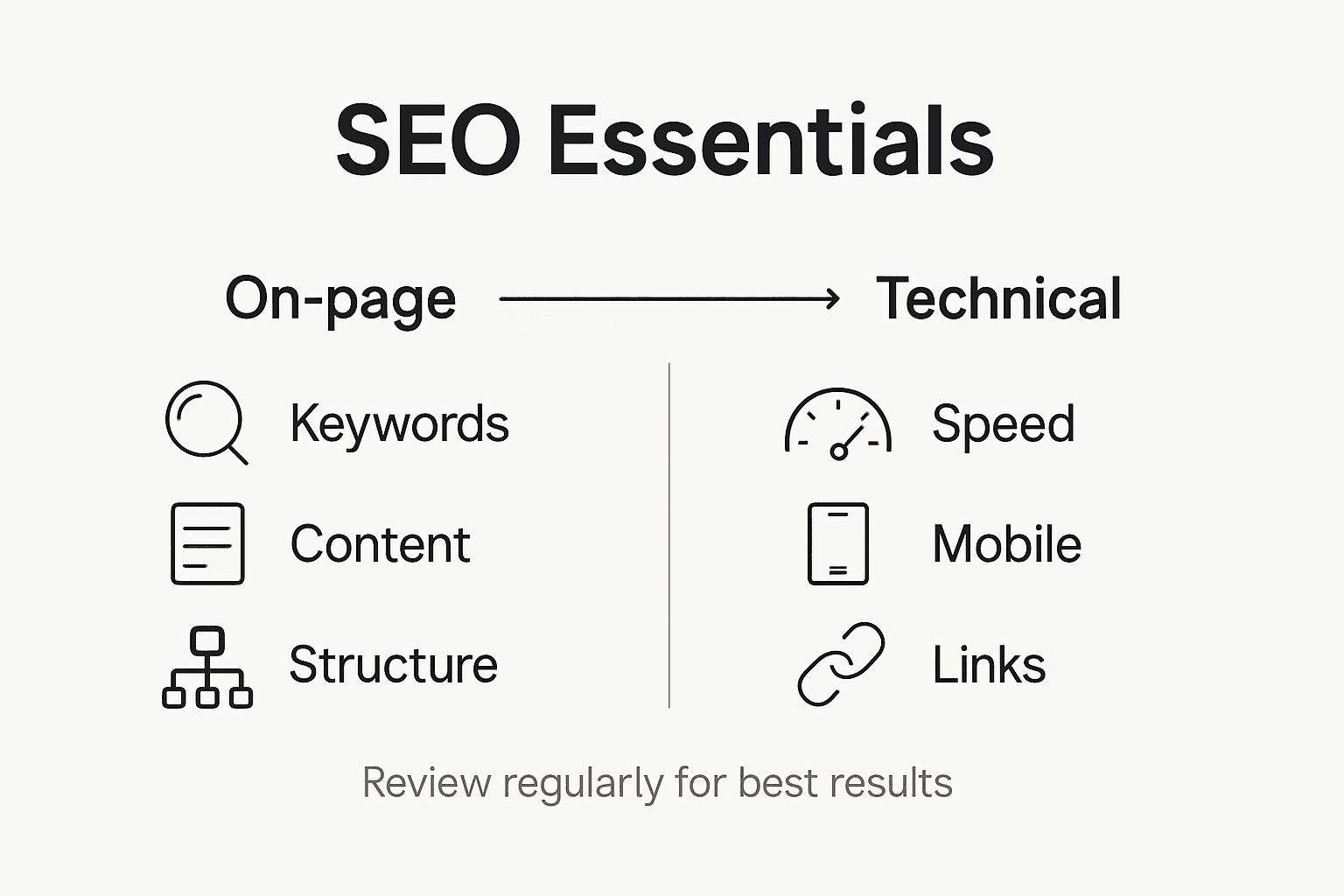
Technical performance represents a critical dimension of search optimization. Websites must prioritize mobile responsiveness, page load speed, secure connections, and clean technical infrastructure. This involves implementing responsive design principles, minimizing unnecessary code, leveraging browser caching, optimizing image sizes, and ensuring compatibility across multiple devices and screen sizes. Advanced optimization strategies also require continuous monitoring of website performance metrics, identifying and resolving potential technical barriers that could impede search ranking potential.
Content development strategies must evolve beyond traditional keyword stuffing, focusing instead on creating comprehensive, authoritative content that provides genuine value to users. This approach involves developing topical content clusters, establishing clear hierarchical structures, and integrating strategic internal linking mechanisms. Successful content strategies anticipate user questions, provide in-depth insights, and maintain a consistent narrative that demonstrates expertise and builds user trust across multiple digital touchpoints.
Pro Tip: Optimization Audit: Conduct quarterly comprehensive reviews of your website's technical performance, content relevance, and search visibility, systematically identifying and addressing potential optimization opportunities before they impact your search rankings.
Risks and SEO Pitfalls to Avoid
Mobile optimization represents a critical vulnerability for many websites, with potential ranking consequences that can dramatically undermine digital performance. Google's algorithmic preference for mobile-first indexing means that websites failing to implement responsive design risk significant search visibility penalties. These technical shortcomings can create cascading negative effects, reducing user engagement, increasing bounce rates, and ultimately diminishing search engine rankings.
Content-related risks pose equally significant challenges for digital marketers and website owners. Common pitfalls include keyword stuffing, duplicative content, thin or low-quality page information, and neglecting user experience principles. Search engines have become increasingly sophisticated at detecting manipulative optimization techniques, penalizing websites that attempt to game ranking algorithms through artificial or deceptive strategies. Successful digital strategies require authentic, high-quality content development that genuinely addresses user needs and provides meaningful information.
Technical infrastructure vulnerabilities can also compromise search engine performance. Websites must maintain robust security protocols, ensure fast page load speeds, implement clean and efficient code structures, and provide seamless cross-device experiences. Critical technical risks include slow page rendering, broken internal links, improper metadata implementation, and inadequate structured data markup. These technical deficiencies can create significant barriers to search engine crawling and indexing, preventing websites from achieving their full digital potential.
Pro Tip: Risk Mitigation Strategy: Conduct monthly comprehensive audits of your website's mobile responsiveness, technical performance, and content quality, proactively identifying and addressing potential optimization barriers before they negatively impact your search rankings.
Elevate Your Google Rankings with Proven SEO Signal Boosts
The article highlights the challenge of increasing organic traffic through impactful Google optimization and improving critical SEO signals such as click-through rate, bounce rate, and dwell time. Many website owners struggle to break through to the first page of Google despite producing quality content and following good SEO practices. The emotional frustration of seeing your site stuck beyond page one can be overwhelming when competing in such a competitive digital environment.
At ClickSEO.io, we understand the importance of leveraging authentic user behavior to improve your site's search engine performance naturally and safely. Our proprietary CTR bot delivers real, geo-targeted visitors from organic search results, enhancing the exact metrics Google values as ranking signals. This aligns perfectly with the article's emphasis on creating sustainable organic growth that boosts visibility and brand credibility while avoiding risky tactics.
Ready to transform your website's SEO performance and climb Google rankings rapidly? Experience a measurable impact on your key SEO metrics with customizable campaigns tailored to your goals. Discover how authentic organic traffic can ignite your digital growth today at ClickSEO.io and explore how strategic search optimization can work smarter for your website.
Frequently Asked Questions
What are the main benefits of optimizing for Google?
Optimizing for Google can significantly boost your website traffic, enhance brand credibility, and provide a sustainable return on investment (ROI) through organic search traffic. Organic traffic is more cost-effective than paid advertising and helps establish trust with users who prefer natural search results.
How does Google rank websites in search results?
Google uses complex algorithms that analyze various ranking signals, including content relevance, website authority, user experience, and technical performance. Factors such as mobile responsiveness, page load speed, and high-quality backlinks are crucial for achieving better rankings.
What should my SEO strategy focus on?
Your SEO strategy should focus on creating high-quality, valuable content that addresses user questions, optimizing technical aspects of your website, and building authoritative backlinks. Additionally, regularly monitoring performance metrics can help identify areas for improvement.
What common SEO pitfalls should I avoid?
Common SEO pitfalls include keyword stuffing, using low-quality or duplicated content, neglecting mobile optimization, and ignoring technical aspects like slow page speeds. Focusing on authentic, high-quality content and maintaining a robust technical structure can help avoid these issues.
Recommended
- How to Increase Dwell Time on Your Website
- Search Box Optimization (SBO): What it is; Who it's For & How it Works
- Fake Website Traffic: Where to Buy & Real Alternatives
- Where to Get Free Website Traffic: 25+ Proven Methods to Boost Visitors in 2025