Why Optimize for Google First Page Rankings

Most American businesses never see the real power of Google until they reach the first page—where over 90% of click-throughs actually happen. As competition intensifies across North America, every digital marketer and SEO consultant managing multiple clients knows that relying on old tactics means missing out on critical opportunities. Discover how a focused first page optimization strategy can quickly deliver measurable visibility and client satisfaction without overwhelming your workflow.
Key Takeaways
What First Page Optimization Means
First page optimization represents a strategic approach in digital marketing designed to elevate a website's visibility within search engine results pages (SERPs). At its core, this process involves meticulously refining web pages to meet search engine optimization criteria that increase the likelihood of ranking on Google's critical first page of results.
The primary goal of first page optimization is capturing user attention by positioning a website prominently where most search traffic originates. Statistically, websites ranking in the top 10 search results receive over 90% of all click-through traffic, making this digital real estate extraordinarily valuable for businesses seeking online visibility. This optimization encompasses multiple technical and content-related strategies, including precise keyword targeting, robust metadata development, semantic HTML structuring, and creating high-quality, relevant content that matches user search intent.
Successful first page optimization requires a multifaceted approach that balances technical excellence with user-focused content strategies. Digital marketers must understand search algorithms' complex ranking mechanisms, which evaluate factors like page load speed, mobile responsiveness, content quality, backlink profiles, and user engagement metrics. By systematically addressing these elements, websites can progressively improve their search engine rankings and increase their chances of appearing on the coveted first page of Google results.
Pro tip: Conduct a comprehensive website audit every quarter to identify and address potential optimization barriers that might prevent first page ranking success.
The Business Impact of Top Rankings
For businesses in the digital marketplace, securing top rankings on Google represents far more than a vanity metric—it's a critical driver of economic success. Google's search algorithms fundamentally determine market visibility by channeling potential customers directly to businesses that demonstrate the most relevance and authority in their respective domains. Companies ranking in the top five search results capture an astounding 67% of all user clicks, transforming search engine positioning into a powerful competitive advantage.
The financial implications of top Google rankings extend well beyond mere website traffic. High-ranking websites experience significantly enhanced brand credibility, with users inherently trusting top-listed businesses as industry leaders. This psychological phenomenon translates into tangible business outcomes: increased lead generation, higher conversion rates, and substantially improved customer acquisition costs. Small and medium enterprises can effectively compete with larger competitors by strategically optimizing their digital presence and achieving prominent search rankings.

Beyond immediate revenue generation, top search rankings create long-term strategic benefits that compound over time. Businesses consistently appearing on the first page establish themselves as authoritative voices in their industry, which attracts higher-quality partnerships, media attention, and potential investor interest. The cumulative effect of sustained search visibility can fundamentally reshape a company's market positioning, transforming digital real estate into a powerful brand-building mechanism that drives sustainable growth.
Pro tip: Invest in comprehensive keyword research and content strategy to systematically improve your website's search engine rankings and unlock exponential business growth opportunities.
SEO Metrics and Google Ranking Signals
Understanding Google ranking signals requires a comprehensive approach to deciphering the complex algorithms that determine search result positioning. Search engine optimization metrics encompass a sophisticated network of technical and content-related factors that digital marketers must carefully analyze and optimize. These signals range from technical website elements like page load speed and mobile responsiveness to more nuanced indicators such as content relevance, user engagement, and domain authority.
The most critical ranking signals include multiple interconnected components that search engines evaluate holistically. Backlink quality remains a paramount factor, with Google's algorithm assessing not just the quantity of links, but their relevance, authority, and organic nature. User behavior metrics play an increasingly important role, with signals like click-through rates, time spent on page, and bounce rates providing insights into content quality and user satisfaction. Technical SEO elements such as site structure, semantic HTML markup, and page speed directly influence a website's ability to rank prominently in search results.

Digital marketers must adopt a holistic approach to tracking and improving these ranking signals. This involves a multifaceted strategy that combines technical optimization, content quality, user experience, and continuous performance monitoring. Advanced analytics tools can help identify specific areas for improvement, allowing websites to make data-driven decisions that incrementally enhance their search engine visibility. By understanding the intricate relationship between various ranking signals, businesses can develop more strategic approaches to search engine optimization that go beyond simple keyword targeting.
Here's a summary of key SEO ranking signals and their typical effects:
Pro tip: Implement a quarterly comprehensive SEO audit to systematically identify and address potential ranking signal weaknesses across your digital properties.
Common SEO Pitfalls to Avoid
Navigating the complex world of search engine optimization requires a strategic approach that avoids critical mistakes that can severely undermine digital marketing efforts. Digital marketers must be vigilant about common SEO pitfalls that can dramatically reduce website visibility and search engine rankings. These pitfalls range from technical oversights to content-related errors that can inadvertently signal low quality to search engine algorithms.
One of the most significant SEO risks involves employing black hat techniques that attempt to manipulate search rankings through artificial or deceptive practices. These strategies might provide short-term gains but ultimately result in severe penalties from search engines, potentially causing permanent damage to a website's online reputation. Common problematic practices include keyword stuffing, purchasing low-quality backlinks, creating duplicate content, and using hidden text or links. Websites must focus on creating genuine, high-quality content that provides real value to users while adhering to search engine guidelines.
Technical SEO challenges represent another critical area where websites frequently stumble. Performance issues like slow page load speeds, poor mobile responsiveness, improper site indexing, and inadequate internal linking can significantly harm search rankings. Digital marketers must adopt a holistic approach that balances technical optimization, content quality, and user experience. This means regularly auditing website performance, ensuring clean and semantic HTML markup, implementing proper schema structured data, and maintaining a mobile-friendly design that provides seamless user interaction across all devices.
Below is a comparison of common SEO pitfalls and their consequences:
Pro tip: Conduct monthly technical SEO audits using reputable tools to proactively identify and resolve potential ranking obstacles before they impact your website's search performance.
Rapid Ranking Tactics with CTR Manipulation
Modern digital marketers are increasingly turning to sophisticated CTR manipulation strategies to accelerate their search engine ranking improvements. Click-through rate (CTR) manipulation represents a nuanced approach to signaling content relevance and engagement to search engine algorithms, leveraging sophisticated techniques that simulate authentic user interaction patterns. These methods aim to generate positive ranking signals by strategically increasing the perceived popularity and user interest in specific web pages.
The core mechanism of CTR manipulation involves generating controlled, targeted clicks that mimic genuine user behavior across diverse geographic locations and device types. Advanced CTR techniques go beyond simple bot-driven approaches, incorporating complex algorithms that randomize interaction patterns, simulate realistic browsing behaviors, and distribute clicks through multiple unique IP addresses. This approach helps websites trigger positive ranking signals while maintaining a natural, organic appearance that avoids triggering search engine spam detection mechanisms.
Understanding the technical landscape of CTR manipulation requires recognizing both its potential benefits and inherent risks. Digital marketers must balance the desire for rapid ranking improvements with the need to maintain long-term search engine credibility. Sophisticated CTR strategies involve careful parameter customization, including geographical targeting, session duration simulation, and behavioral pattern randomization. By creating multi-dimensional interaction signals that reflect authentic user engagement, websites can potentially accelerate their ascent through search engine result pages without compromising their overall digital reputation.
Pro tip: Implement CTR manipulation tactics with surgical precision, focusing on creating signals that genuinely reflect user value rather than attempting aggressive algorithmic exploitation.
Unlock Your Google First Page Potential with ClickSEO.io
Ranking on Google's first page is a critical step that many businesses struggle to achieve despite strong content and technical SEO efforts. If you recognize the challenges of improving essential ranking signals like CTR, bounce rate, and user engagement described in the article, you are not alone. Many digital marketers find optimizing these metrics manually overwhelming and slow, hindering their ability to leapfrog competitors in search results.
ClickSEO.io offers a powerful solution designed to accelerate your rise to the first page by simulating authentic, geo-targeted user behavior. Our proprietary CTR bot mimics natural clicks from real IPs worldwide, improving key SEO signals in a safe and measurable way. By enhancing your website’s search visibility and engagement metrics, you can quickly secure better rankings and enjoy significant business impact as highlighted in the article.
Transform your SEO strategy today.
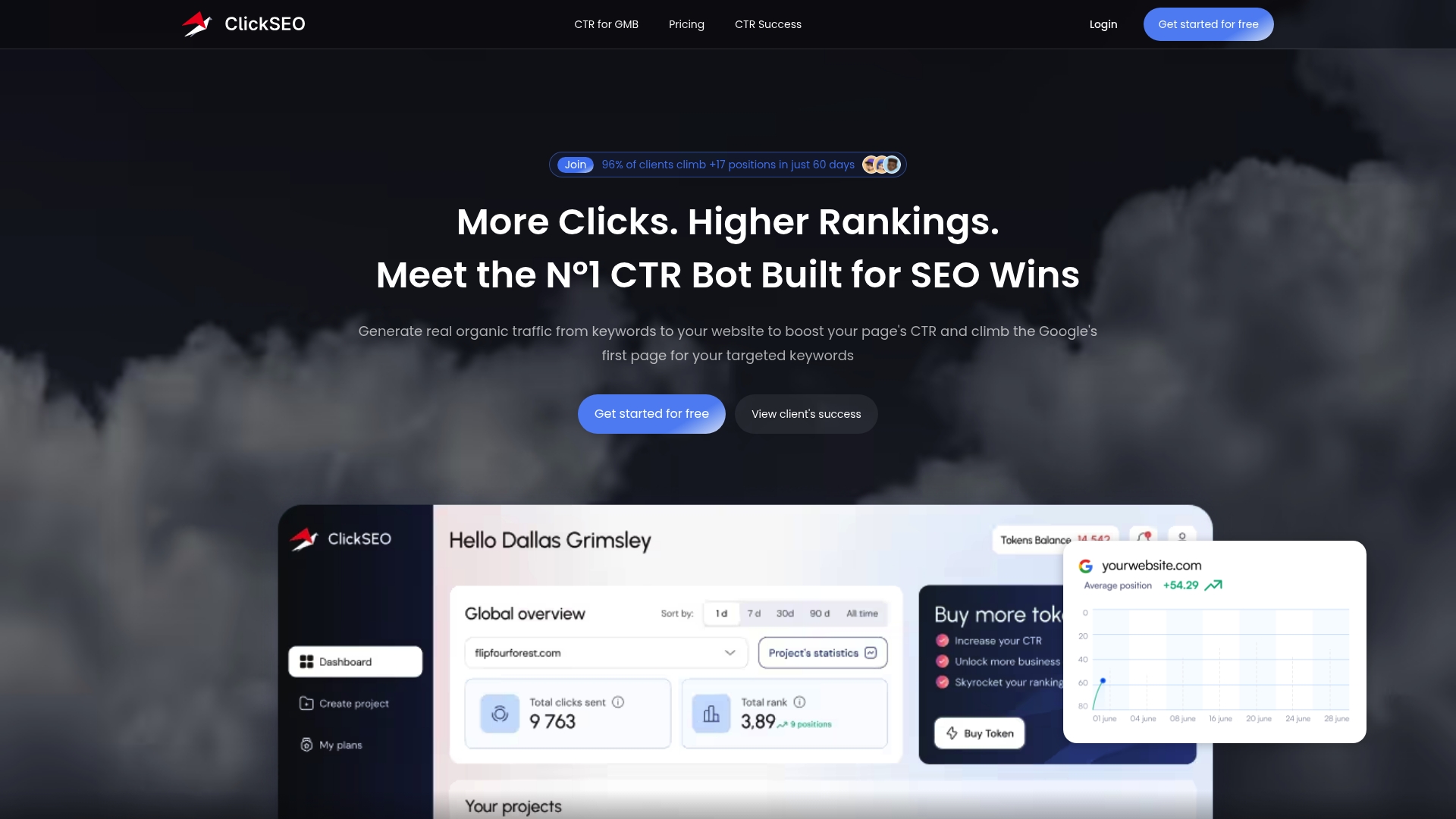
Experience how ClickSEO.io tailors campaign parameters to match your unique goals and watch your website move from elusive backpages into the spotlight. Don’t let slow ranking progress hold you back. Visit ClickSEO.io now to start your journey toward first page success and break free from common SEO pitfalls with smart, targeted CTR strategies.
Frequently Asked Questions
What is first page optimization?
First page optimization is a strategic approach in digital marketing aimed at improving a website's visibility and ranking on the first page of search engine results pages (SERPs) by refining web pages to meet SEO criteria.
Why is securing a top ranking on Google important for businesses?
Securing a top ranking on Google is crucial because websites in the top positions receive over 90% of click-through traffic, which significantly enhances brand credibility, lead generation, and overall business success.
What are some key SEO metrics to monitor for improving search rankings?
Key SEO metrics include page load speed, mobile responsiveness, backlink quality, content relevance, and user engagement metrics such as click-through rates and time spent on page.
What are common SEO pitfalls to avoid during optimization?
Common SEO pitfalls include keyword stuffing, using low-quality backlinks, creating duplicate content, having slow page load speeds, and poor mobile design, all of which can negatively impact search engine rankings.
Recommended