
Why SERP Clicks Matter for SEO Rankings

Most American websites miss out on nearly 65 percent of potential traffic due to low click-through rates. For SEO specialists at growing agencies, this translates to lost revenue and stalled client success. Navigating the complexities of SERP clicks unlocks strategies to attract the right users, increase engagement, and propel clients toward visible, measurable ranking gains.
Table of Contents
- What Are SERP Clicks and How They Work
- The Role of Click Signals in SEO Rankings
- Types of Clicks: Organic, Paid, and Zero-Click
- How Google Interprets CTR and Engagement
- Risks and Safe Practices of Influencing Clicks
- Real-World Results and Current Best Practices
Key Takeaways
What Are SERP Clicks and How They Work
Search engine result page (SERP) clicks represent the fundamental interaction between users and search results, acting as critical signals that help search engines evaluate website relevance and quality. When a user searches for a specific query and selects a particular search result, that click becomes a powerful metric indicating the perceived value and match between the search intent and the webpage content.
The mechanics of SERP clicks are surprisingly nuanced. Search engines like Google track multiple parameters during these interactions, including click-through rate (CTR), time spent on the page, and subsequent user behaviors. These metrics help algorithms determine which results are most relevant and engaging. A higher CTR signals that a webpage is more attractive and matches user expectations, potentially boosting its ranking in future search results. Websites can leverage this by creating compelling meta titles and descriptions that entice users to click.
Understanding SERP click dynamics goes beyond simple numerical tracking. Search engines use sophisticated machine learning algorithms to analyze click patterns across different user segments, geographic locations, and search contexts. This means that a click from a local IP address might carry different weight than an international one, and clicks from users who spend more time on a page are considered more meaningful. Digital marketers can strategically improve their SERP performance by understanding traffic generation techniques with SerpClick, which helps simulate authentic user interactions and improve organic search signals.
Pro tip: Focus on creating highly targeted, user-focused content that naturally encourages clicks by precisely matching search intent and providing clear, valuable information in your meta descriptions and titles.
The Role of Click Signals in SEO Rankings
Click signals represent a sophisticated mechanism through which search engines evaluate website relevance and user engagement. At their core, these signals transform raw user interactions into actionable ranking intelligence, providing search algorithms with critical insights about content quality and user satisfaction. Understanding user interaction metrics reveals a complex ecosystem where every click, scroll, and interaction becomes a potential ranking factor.
The primary click signals that search engines analyze include click-through rate (CTR), bounce rate, and dwell time. CTR measures the percentage of users who click on a specific search result compared to the total number of impressions. A high CTR suggests that a webpage's title and meta description effectively communicate its value, signaling to search algorithms that the content is potentially more relevant. Bounce rate and dwell time provide additional context, indicating whether users find the content engaging enough to stay and explore further or quickly return to search results.

Modern search algorithms employ sophisticated machine learning techniques to interpret these click signals dynamically. They don't just count clicks but analyze patterns, user intent, and contextual nuances. For instance, a click from a local user might carry different weight than an international one, and prolonged engagement on a page can significantly boost its perceived value. Digital marketers can strategically improve their SERP performance by understanding these intricate mechanisms and creating content that naturally encourages user interaction and sustained engagement.
Pro tip: Optimize your meta titles and descriptions to accurately reflect content value, using precise, compelling language that matches user search intent and increases the likelihood of clicks.
Types of Clicks: Organic, Paid, and Zero-Click
The digital search landscape comprises three distinct click categories that fundamentally shape how users interact with search engine results: organic clicks, paid clicks, and zero-clicks. Research into SERP feature interactions reveals a complex ecosystem where these click types dramatically influence website visibility and user engagement strategies.
Organic clicks represent the traditional search experience, where users select non-sponsored search results based on perceived relevance and quality. These clicks are driven by the website's SEO optimization, content quality, and alignment with user search intent. In contrast, paid clicks occur through sponsored advertisements, where businesses pay for prominent placement at the top or side of search results. These clicks are immediately identifiable by small 'Ad' labels and provide instant visibility for brands willing to invest in search advertising.
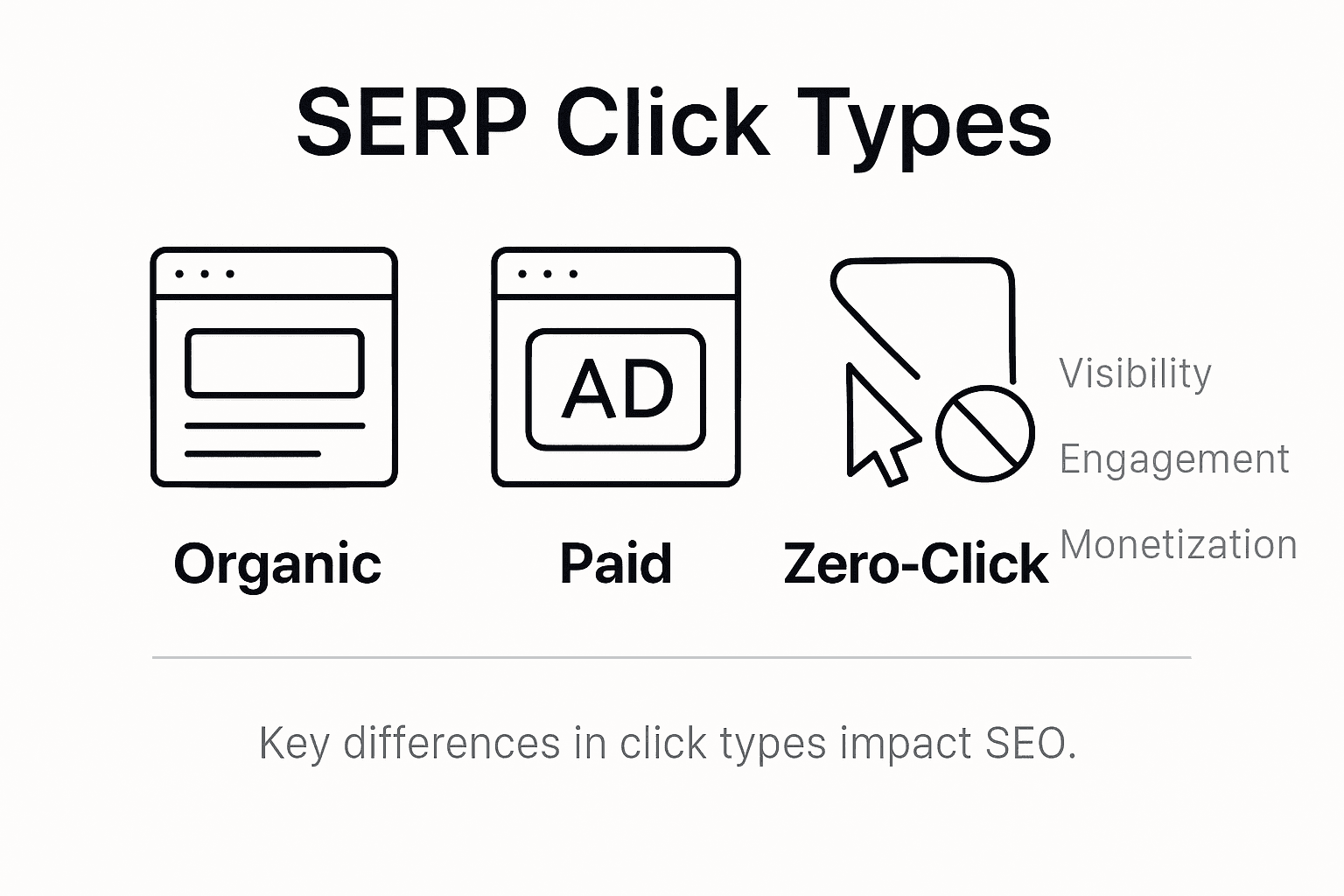
Zero-click searches have emerged as a disruptive trend in search behavior, where users obtain their required information directly from search result features without visiting any website. These interactions typically involve rich results like featured snippets, knowledge panels, and AI-generated summaries that provide immediate answers. For digital marketers, zero-click searches represent both a challenge and an opportunity, requiring sophisticated content strategies that optimize for these emerging search experiences and maximize visibility even when direct website visits are not guaranteed.
Pro tip: Develop content that is concise, authoritative, and structured to potentially appear in featured snippets, increasing your chances of capturing user attention in zero-click search environments.
Here's a summary of how different types of SERP clicks impact website visibility and user engagement:
How Google Interprets CTR and Engagement
Google's interpretation of click-through rate (CTR) and user engagement represents a sophisticated algorithmic approach that goes far beyond simple numerical tracking. The search engine employs complex machine learning models that analyze multiple dimensions of user interaction, transforming raw click data into nuanced ranking signals. Recent research on evolving CTR patterns demonstrates how these metrics have become increasingly dynamic with the introduction of AI-powered search features.
The primary engagement metrics Google scrutinizes include click-through rate, bounce rate, dwell time, and user interaction depth. CTR specifically measures the percentage of users who click on a particular search result relative to its total impressions. A high CTR signals that a webpage's title and meta description effectively communicate its relevance, suggesting to Google's algorithms that the content precisely matches user search intent. Bounce rate and dwell time provide additional context, revealing whether users find the content substantive enough to remain engaged or quickly return to search results.
Modern search algorithms employ sophisticated contextual analysis that considers click signals across multiple dimensions. Factors like geographic location, device type, search history, and user demographics can subtly influence how Google interprets engagement metrics. For instance, a click from a local user might carry different algorithmic weight compared to an international one, and prolonged user interaction can significantly boost a webpage's perceived value. This multifaceted approach ensures that ranking signals remain dynamic and responsive to evolving user behaviors and search landscapes.
Pro tip: Develop content that encourages longer user sessions by creating comprehensive, well-structured information that answers multiple related questions within a single page.
Compare the key metrics Google uses to interpret user engagement:
Risks and Safe Practices of Influencing Clicks
Navigating the intricate landscape of SERP click manipulation requires a nuanced understanding of ethical boundaries and algorithmic risks. Search engines have sophisticated detection mechanisms designed to identify and penalize artificial or manipulative click behaviors that deviate from natural user interactions. Ethical considerations around SERP data interactions emphasize the critical importance of maintaining transparency and adhering to established search engine guidelines.
The primary risks associated with click manipulation include potential search ranking penalties, temporary or permanent website deindexing, and loss of credibility with both search algorithms and human users. Artificial click generation techniques that employ bot networks, click farms, or automated scripts can trigger immediate algorithmic scrutiny. Search engines like Google employ advanced machine learning models that can detect unnatural click patterns by analyzing multiple contextual signals such as IP diversity, user behavior consistency, geographic distribution, and interaction time.
Safe practices for improving click-through rates involve focusing on genuine user experience optimization. This means creating high-quality, relevant content with compelling meta descriptions, strategic keyword targeting, and engaging titles that naturally attract user clicks. Legitimate strategies include technical SEO improvements, structured content that answers user questions comprehensively, and developing a robust content marketing approach that builds organic audience engagement. The goal is to generate authentic user interest rather than attempting to artificially manipulate click metrics through prohibited techniques.
Pro tip: Prioritize creating exceptional, user-focused content that genuinely serves audience needs, as this approach naturally encourages higher click-through rates and sustained user engagement.
Real-World Results and Current Best Practices
The evolving landscape of SEO demands a strategic approach that goes beyond traditional optimization techniques. Comprehensive SEO case studies reveal that successful digital marketing strategies now require a holistic understanding of user engagement, technical performance, and content relevance. Modern websites must craft experiences that not only attract initial clicks but sustain user interest through high-quality, contextually rich content.
Industry trends for 2025 emphasize sophisticated optimization strategies that leverage advanced technical and content-driven approaches. This includes implementing structured data markup, creating comprehensive content that addresses multiple user intents, and developing dynamic meta descriptions that precisely match search queries. Successful strategies now involve continuous testing and refinement of SERP elements, with an emphasis on creating content that provides immediate value and encourages deeper user exploration.
Effective click optimization requires a multifaceted approach that combines technical SEO, content strategy, and user experience design. Websites must focus on creating seamless, intuitive experiences that answer user questions quickly while providing depth and context. This means developing content clusters, improving site architecture, and ensuring that each piece of content serves a clear purpose within the broader user journey. Successful digital marketers are now treating click optimization as a comprehensive strategy that extends far beyond simple keyword targeting.
Pro tip: Implement a continuous improvement framework for your content, regularly analyzing user interaction data and refining your approach based on real user behavior and engagement metrics.
Boost Your SEO Rankings by Leveraging Authentic SERP Clicks
Understanding how SERP clicks influence key SEO signals such as CTR, bounce rate, and dwell time is crucial for any digital marketer or website owner striving to climb the first page of Google. The challenge many face is generating genuine, geo-targeted traffic that search engines recognize as natural user behavior without risking penalties. This article highlights the importance of authentic click signals in improving your website's ranking potential.
ClickSEO.io offers a cutting-edge solution tailored to this need. Our platform uses a proprietary CTR bot that simulates real user interactions with your site by delivering organic-looking visitors from over 170 countries using genuine IP addresses. This helps improve your site's engagement metrics exactly as Google expects, boosting your ranking with safe and measurable click activity. Discover how you can rapidly increase your SEO performance and overcome ranking barriers with ClickSEO.io.

Ready to see real improvement in your Google rankings? Start leveraging authentic, geo-targeted SERP clicks today with ClickSEO.io and learn more about how our platform elevates organic traffic generation by visiting our landing page. Take control of your SEO success and turn click data into ranking power now.
Frequently Asked Questions
What are SERP clicks and why are they important?
SERP clicks are the interactions users have with search engine results, indicating the relevance and quality of a webpage. They are important because they help search engines evaluate how well a webpage matches user intent, influencing its ranking in search results.
How do SERP clicks affect SEO rankings?
SERP clicks affect SEO rankings through metrics such as click-through rate (CTR), bounce rate, and dwell time. A high CTR suggests that a webpage effectively meets user expectations, potentially boosting its search ranking, while low engagement metrics may signal the opposite.
What are the types of clicks on search engine results?
The types of clicks include organic clicks, paid clicks, and zero-click searches. Organic clicks come from non-sponsored results, paid clicks come from ads, and zero-click searches provide instant answers without requiring a visit to a website.
How can I improve my SERP click-through rate?
You can improve your SERP click-through rate by optimizing meta titles and descriptions to clearly convey your content's value, using compelling language that matches user search intent, and creating high-quality, relevant content that engages users.
Recommended
- Meet ClickSEO - SerpClix Review and Alternative
- Meet ClickSEO - SerpEmpire Review and Alternative
- Meet ClickSEO - SearchSEO Review and Alternatives
- ClickSEO | Pricing