Unlock SEO Traffic Service Potential
You’ve done the work. The content is better than what’s above you. The page loads cleanly. The title tag is solid. Internal links are in place. Yet the keyword sits on page two and doesn’t move.
That’s the point where many teams make the wrong diagnosis. They assume they need more articles, more backlinks, or another technical cleanup. Sometimes they do. But often the page is no longer losing because the fundamentals are broken. It’s losing because Google has to choose between several acceptable results, and your listing isn’t generating strong enough user signals to win that tie.
That’s where an seo traffic service enters the conversation. Not the cheap kind that sends junk visits. The useful kind that focuses on search behavior itself: seeing the result, choosing it, landing, staying, and exploring. In a search environment shaped by zero-click behavior and AI summaries, those signals matter more, not less.
Stuck on Page Two Why Your SEO Needs More Than Content
A common pattern shows up after the first wave of SEO work. A company publishes service pages, comparison pages, and supporting blog content. Rankings improve from nowhere to somewhere. Then they stall at positions that are close enough to hurt.
The page might sit at 11, 12, or 14 for months. It gets impressions in Google Search Console but the clicks lag. The team keeps refreshing copy and swapping keywords, but nothing changes because the issue isn’t topical coverage anymore. It’s response from searchers.
When two good pages compete, behavior decides
Google doesn’t rank pages on content alone. In competitive results, the engine watches what people do. Do they click your result when they see it? Do they stay long enough to suggest the page matched intent? Do they move deeper into the site?
Those aren’t vanity signals. They help separate a merely relevant page from a result people prefer.
A lot of businesses miss this because they’ve been told that SEO is dying anyway. That claim doesn’t hold up well against actual market behavior. In 2025, an analysis of over 40,000 large U.S. websites found that organic search traffic declined only 2.5% year over year, while organic still held 90% of total clicks on Google SERPs according to ALM Corp’s analysis of SEO traffic decline in 2025.
So yes, search has changed. No, organic clicks haven’t stopped mattering.
The missing layer between visibility and rankings
A page on page two usually has one of three problems:
- Weak snippet appeal that causes searchers to skip it.
- Intent mismatch where the title promises one thing and the page delivers another.
- Thin engagement after the click because visitors bounce or don’t explore.
That’s why classic on-page work still matters. If you need a clean example of aligning messaging and discoverability, this guide on how to optimize a press release for SEO is useful because it shows how presentation affects visibility, not just the words on the page.
A page can be technically sound and still underperform if searchers keep choosing another result.
An seo traffic service is often used at this exact stage. Not as a substitute for SEO basics, but as a lever when the basics are already in place and the page needs stronger engagement signals to break through. For a deeper look at search-focused CTR mechanics, this overview is a useful primer: https://www.clickseo.io/blog/searchseo
What Is an SEO Traffic Service Really
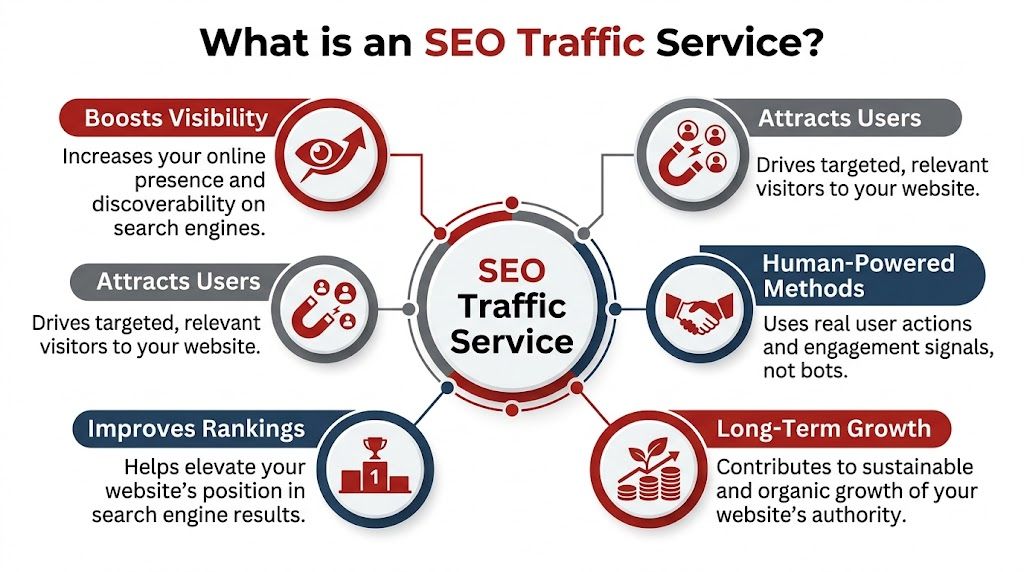
An seo traffic service is a service designed to improve the search behavior signals around a page. At its most practical level, that means increasing the chance that a page gets clicked from the search results and visited in a way that looks like genuine interest.
The phrase gets abused because it covers two very different products. One is automated junk traffic. The other is managed traffic driven by real people who perform searches, select listings, and interact with pages like normal users. Those are not the same thing.
What the service is trying to influence
The core target is CTR, or click-through rate. That matters because the click gap between rankings is steep. Position 1 averages 39.8% CTR, position 2 averages 18.7%, and position 3 averages 10.2% according to SE Ranking’s CTR benchmark analysis.
That drop-off explains why even a small move upward can change the economics of a keyword. If a page gets nudged into stronger engagement territory, it can become more competitive for a top result.
Two very different versions of the same label
Think of it this way. A real human click network is like a focus group made of actual shoppers. Bot traffic is a room full of mannequins. Both can fill seats. Only one gives you meaningful reactions.
Here’s the clean distinction:
Human-powered service
Real people search, identify a target listing, click it, remain on page, and often continue browsing. The behavior is varied, slower, and more believable.Bot traffic service
Scripts hit a page or mimic a click path. The pattern is often repetitive, shallow, and disconnected from real search behavior.Hybrid or disguised automation
Some vendors claim “realistic” traffic but layer simple automation on top of low-quality proxies. Such practices result in buyers getting burned.
What a legitimate service is not
A legitimate service is not supposed to replace technical SEO, content depth, or link authority. If a page is poorly written, mismatched to search intent, or crippled by UX issues, extra clicks won’t rescue it for long.
Working definition: A useful seo traffic service supports rankings by strengthening user interaction signals around already viable pages.
That’s why I only consider these services for pages that have already earned visibility. They’re showing impressions. They’re close enough to compete. They just aren’t winning enough clicks or sustaining enough engagement after the click.
The real use case
A strong page stuck in positions 5 through 20 is the classic candidate. The page has ranking potential. It may even convert well when visitors arrive. It just isn’t drawing enough click preference from the search results.
Use the service there, and it becomes a strategic tool. Use it on a page with weak copy, weak intent alignment, and poor UX, and it becomes wasted spend.
Human Clicks vs Bot Traffic The Critical Difference
The biggest mistake buyers make is assuming all traffic services work the same way. They don’t. The gap between a human-powered campaign and a bot-driven campaign is the gap between signal amplification and obvious manipulation.
Why detection risk changes with traffic quality
Search engines don’t just see whether a visit happened. They evaluate patterns. Repetition, timing, navigation behavior, and source consistency all matter.
Bot traffic tends to fail because it behaves like software. It clicks too neatly, exits too quickly, or creates repetitive patterns that don’t resemble normal user journeys. Human traffic carries natural messiness. People pause, scroll unevenly, open extra pages, and spend inconsistent amounts of time on a site.
That difference changes both safety and effectiveness.
Human Click Networks vs. Bot Traffic Comparison
| Feature | Human-Powered Network (e.g., ClickSEO) | Automated Bot Traffic |
|---|---|---|
| Traffic source | Real users performing searches and visits | Scripts or automated browsers |
| Search behavior | Keyword search, listing selection, on-site browsing | Often direct hits or simplified SERP simulation |
| Session patterns | Variable dwell time, scrolling, page depth | Repetitive timing and shallow interaction |
| IP footprint | Diverse consumer-style connections | Often clustered, synthetic, or easier to pattern-match |
| Analytics quality | Looks closer to normal user behavior | Often creates noisy or suspicious analytics |
| Risk profile | Lower when campaigns are conservative and targeted | Higher because patterns are easier to detect |
| Best use | Supporting pages already close to ranking | Usually no durable strategic use |
What real human behavior looks like
Real searchers don’t move in straight lines. They hesitate. They scan. Sometimes they leave fast because the page is wrong. Sometimes they stay and open more pages because the page solved the problem.
A solid human-driven seo traffic service tries to mirror that range rather than force a robotic version of engagement.
Signs of a human-centered approach include:
Keyword-led entry
Users start from the search result, not from a random referral source.Natural variation
Visits differ in timing, duration, and depth.Geo control
Campaigns can align with the market where rankings matter.Page journey options
Users don’t just land and disappear. They may view service pages, category pages, or supporting content.
What low-quality vendors usually reveal
Bad providers often expose themselves in the pitch. They promise instant ranking jumps. They talk about “massive traffic blasts.” They avoid explaining where traffic comes from or how behavior is shaped.
If they can’t tell you whether the visit begins with a search, they’re probably not selling an SEO traffic service at all. They’re selling generic traffic inflation.
For a breakdown of the risks tied to automated systems, this internal resource on traffic bots is worth reviewing: https://www.clickseo.io/blog/traffic-bot
Cheap traffic usually fails twice. First in the rankings. Then in your analytics, where it muddies the data you need to make decisions.
Why the distinction matters strategically
Human-powered campaigns can support a broader SEO program because they reinforce pages that already have search relevance. Bots usually create noise without helping the ranking battle.
That matters more now because SEO teams can’t rely only on raw traffic totals as proof of success. Search visibility is messier, attribution is weaker, and top-of-funnel clicks are less dependable. If you’re going to influence user signals, the traffic has to resemble actual users closely enough to strengthen the right pattern.
The useful mindset is simple. Don’t ask, “Can this service send visits?” Ask, “Can this service create believable search interactions around pages that deserve to rank better?”
The Real World Impact on Rankings and Timelines
A good seo traffic service doesn’t create magic. It creates pressure in the right place.
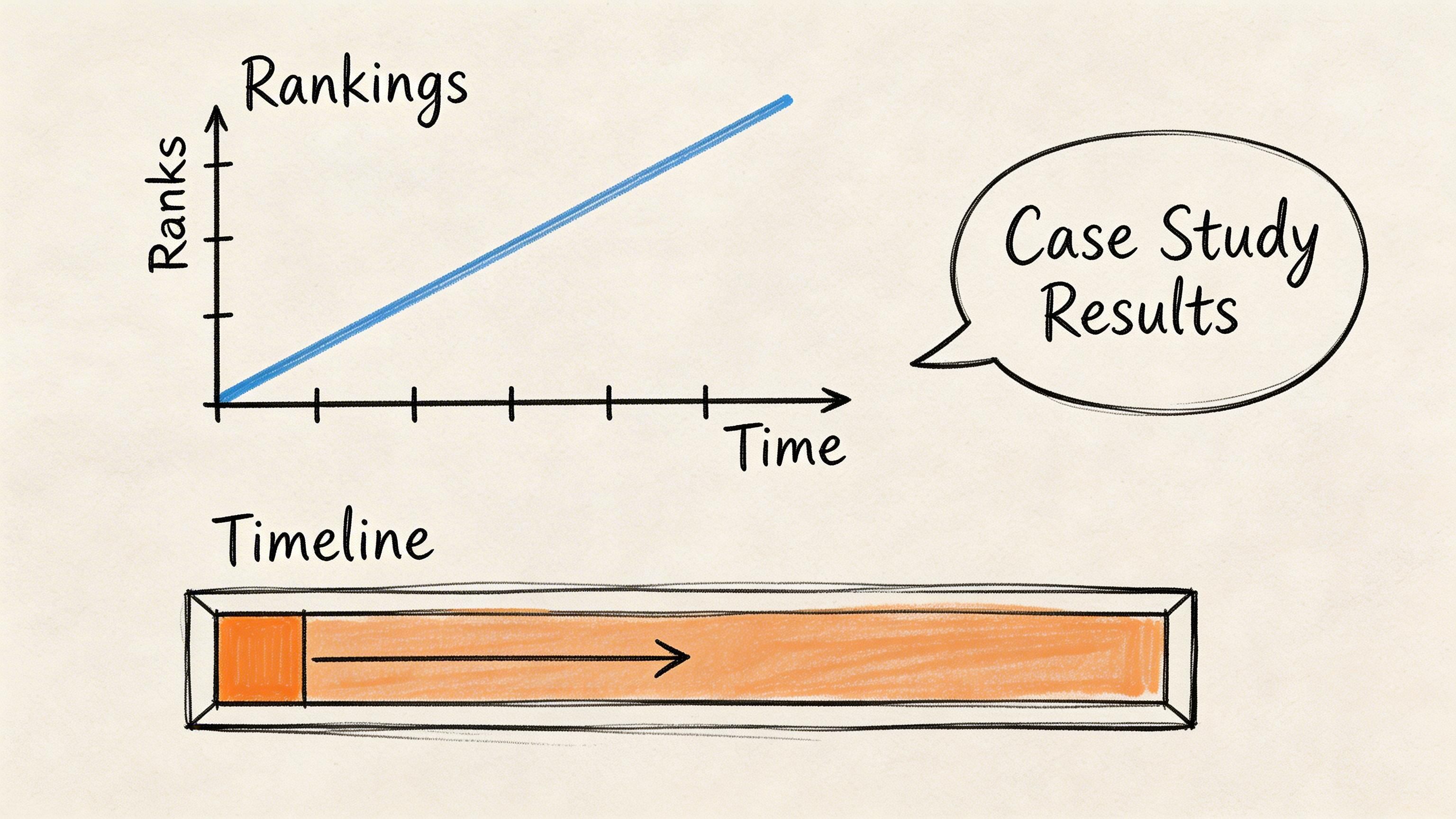
If a page is already indexed, already somewhat relevant, and already earning impressions, better interaction signals can help it graduate from “visible” to “chosen.” That’s the zone where rankings often start to move.
What progress usually looks like first
The first shift tends to show up in Google Search Console before it shows up in rank trackers. The page starts earning more clicks relative to impressions. Then average position improves. Then secondary pages on the same topic sometimes move with it because the site sends a stronger relevance signal around the cluster.
In practice, I watch three things first:
CTR trend in Search Console
If that doesn’t improve, the campaign likely isn’t affecting the right layer.On-site engagement quality
Session patterns should look closer to normal search traffic, not distorted.Keyword stability
Rankings should hold gains, not spike and collapse.
Why a higher ranking is commercially important
This isn’t just about ego or screenshots. Organic search drives business value at a level most channels struggle to match. Across seven key industries, organic search generates 33% of overall website traffic and produces 34% of all qualified leads with a 14.6% close rate, compared with 1.7% for outbound leads according to G2’s SEO statistics roundup.
That’s why even modest ranking improvements on money pages matter. A service page that moves from lower visibility into active contention can change lead flow without adding more ad spend.
Timelines that are realistic
The temptation is to expect dramatic movement right away. That’s usually how bad vendors hook buyers.
A more grounded timeline looks like this:
Early signal phase
Search Console metrics may begin to shift first.Validation phase
Rankings start to test upward, then settle.Sustained movement
Pages that also have strong UX and intent alignment tend to hold gains more reliably.
The pages that respond best usually share a few traits. They already convert reasonably well. They have a compelling title and meta description. They satisfy intent quickly after the click.
If a page doesn’t deserve a higher ranking, added clicks won’t make it deserve one.
Where traffic services fit with authority building
CTR work works best when paired with authority signals. That can include links, branded search growth, and stronger topic coverage. One practical companion tactic is digital PR. If you want a grounded look at that side of the equation, this guide on how press releases for SEO can boost authority and rankings complements engagement-focused work well.
The practical lesson is simple. A human-powered seo traffic service can help pages that are already close. It can accelerate movement. It can improve the odds that Google sees your result as a preferred choice. But it performs best as part of a system, not as a shortcut.
How to Choose a Safe and Effective SEO Traffic Service
Buying the wrong traffic service can waste money fast. It can also contaminate your analytics and make future SEO decisions harder. The right way to evaluate vendors is to ignore the hype and interrogate the mechanics.
Start with the market reality, not the sales pitch
Traditional traffic totals are becoming less reliable as the only measure of SEO success. In the “dark SEO funnel” era, where zero-click searches reduce visible traffic, services that strengthen authentic user signals for high-intent keywords become a practical tool for reclaiming visibility, as discussed by Search Engine Land’s analysis of the dark SEO funnel.
That doesn’t mean every vendor selling “organic traffic” is useful. It means the buyer needs sharper filters.
Questions worth asking before you buy
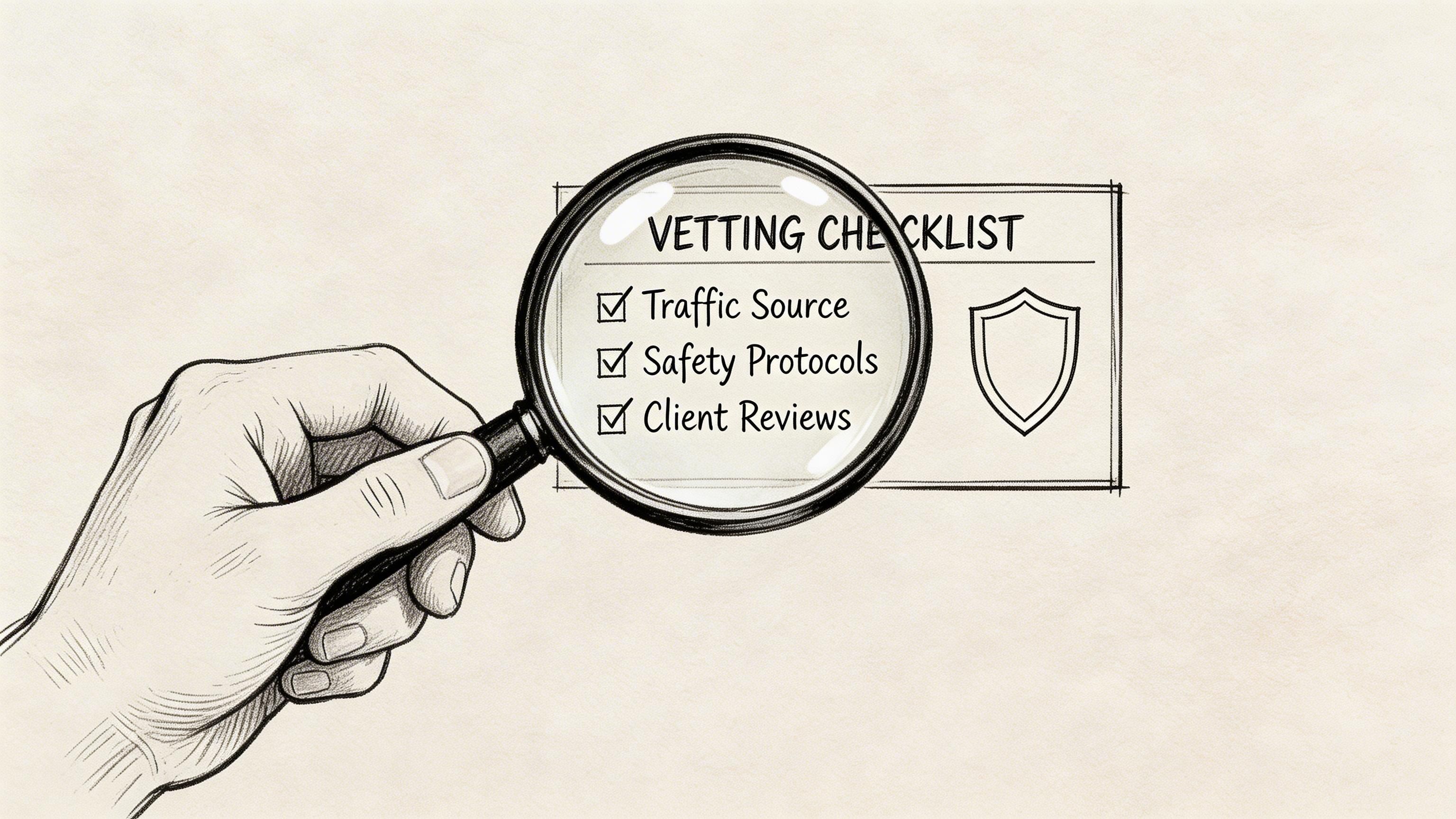
A trustworthy provider should answer these directly:
Where does the traffic begin
You want search-led visits, not random referral bursts.How is behavior varied
Ask how dwell time, page depth, and timing differ across sessions.Can campaigns be geo-targeted
Local intent and country-level targeting matter.What reporting do I get
You should be able to line vendor activity up against Search Console and analytics behavior.Can I test on specific pages and keywords
Broad untargeted traffic is less useful than controlled campaign design.
Red flags that usually mean trouble
Some warning signs show up immediately:
Instant ranking promises
No serious provider can guarantee a top spot.No explanation of traffic source
If they can’t describe who is clicking and how, assume automation.Very low pricing with huge volume claims
That usually points to synthetic traffic.One-size-fits-all packages
Good campaigns depend on page type, geography, and search intent.
What a safer provider setup looks like
A safer seo traffic service gives you control. You should be able to define pages, keywords, geography, and session behavior. If a provider also supports multiple domains or lets you calibrate campaigns slowly, that’s a good sign because it suggests they expect testing, not blind scaling.
One example in this category is ClickSEO, which is built around search-result clicks, geo-targeting, and configurable session behavior rather than raw visit inflation. If you want to understand that model in more detail, this overview explains how to approach buy organic traffic with a narrower SEO purpose instead of a vanity traffic mindset.
Buyer rule: If the provider talks mostly about volume and barely mentions behavior, they’re selling numbers, not SEO leverage.
Use this video as a sanity check
This walkthrough is useful when you’re comparing vendors and trying to separate controlled CTR work from generic traffic products.
Pricing model matters less than control
Some vendors charge per click. Others use monthly plans. The better question isn’t which model is cheaper. It’s which model lets you test safely.
A controlled monthly campaign can make sense if it allows gradual pacing and clear targeting. A click-based campaign can also work if quality controls are high. Either way, don’t buy scale before you’ve proven response on a small set of pages.
Your First Campaign Onboarding and Testing Safely
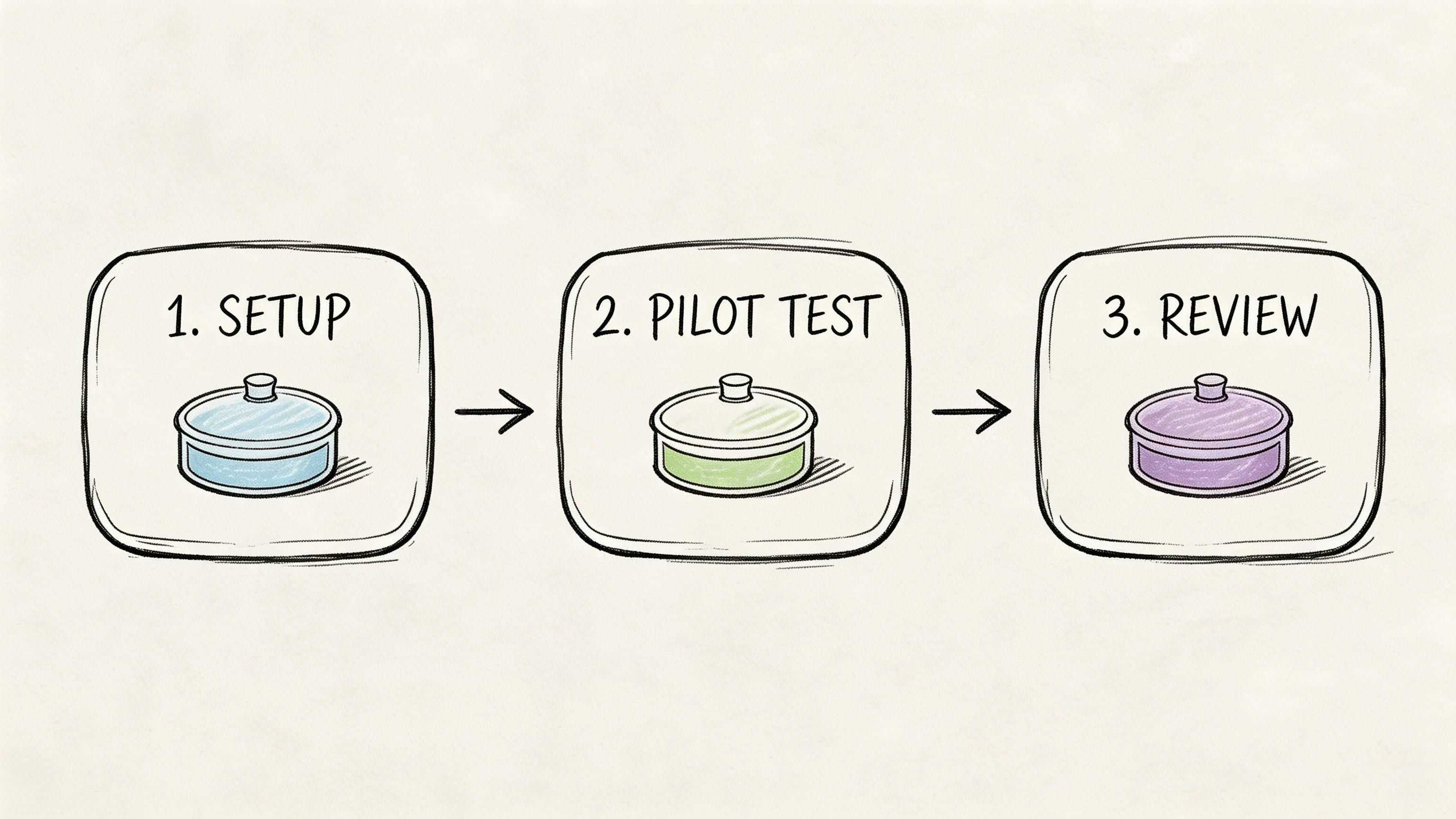
The safest first campaign is small, specific, and boring. That’s a good thing.
Most mistakes happen when teams rush into broad keyword lists, aggressive click volumes, or pages that aren’t ready. A proper test should answer one question only: does controlled search-driven engagement improve performance on pages that already have ranking potential?
Pick pages that are close, not pages that are broken
The best candidates are usually pages already getting impressions and sitting just outside the strongest positions. They should also matter commercially. Think service pages, product collections, comparison pages, or local landing pages with proven intent.
Avoid pages with obvious unresolved issues such as poor title tags, weak copy, or confusing layouts. Traffic testing won’t tell you much there because too many variables are in play.
A simple filter works well:
Choose pages with business value
If the page ranks better, revenue or lead quality should improve.Check that the page already earns impressions
You want something Google already understands.Confirm intent alignment
The query, snippet, and page content should match.
Configure the campaign conservatively
The first campaign should feel restrained. You’re trying to observe behavior, not overwhelm the system.
Good setup choices include:
Tight keyword targeting
Focus on a small set of meaningful queries.Relevant geography
Match the market where the page should rank.Natural session expectations
Visitors should behave like interested searchers, not perfect actors.Page depth that makes sense
A service page might lead to pricing, case studies, or contact pages.
What to watch in your reporting
Use your own data tools, not just the vendor dashboard.
In Google Search Console, pay attention to:
- Impressions
- Clicks
- CTR
- Average position
In Google Analytics, focus on:
- Session quality
- Navigation paths
- Time spent and depth of browsing
- Whether the traffic profile looks plausible beside your normal organic traffic
How to judge the result
A successful pilot usually looks orderly, not dramatic. Search Console begins to show stronger click response. Rankings become less stagnant. The page behaves more like a competitive result and less like a listing people ignore.
If the traffic looks unnatural in analytics, stop. If clicks rise but rankings don’t stabilize, review the page itself. The problem may still be title appeal, intent match, or conversion friction after the visit.
Run the first campaign like an experiment. One page group, one hypothesis, one measurement window.
That discipline matters more than the platform you choose.
Frequently Asked Questions About CTR Services
Are CTR services black hat by definition
No. The label depends on how the service works and how it’s used.
A bot farm blasting fake visits is clearly risky. A controlled human-driven campaign used to support already relevant pages sits in a different category. It’s still a tactic that requires judgment, but it isn’t the same as automated manipulation at scale.
Can Google detect this
Google can detect patterns. That’s the core issue.
If the campaign relies on rigid automation, repetitive behavior, or traffic that doesn’t resemble normal search interaction, risk rises fast. Human-powered campaigns reduce that risk because the behavior is less uniform and more closely tied to real search actions. Even then, aggressive settings are a mistake.
Does this help local SEO
It can, especially when local rankings are crowded and several businesses have similar authority. For local businesses, targeted organic clicks from a human network can simulate demand signals like reduced bounce rates and extended sessions, which are valuable for climbing competitive Map Pack rankings, as noted by SEOTuners in its discussion of local SEO services.
That said, local SEO still depends on fundamentals. Your Google Business Profile, reviews, category alignment, and local landing page quality still do the heavy lifting.
Should I use CTR services instead of content or links
No. Use them after the basics are credible.
If your page lacks authority, answers the wrong question, or has weak on-page SEO, traffic stimulation won’t fix the core problem. The strongest use case is a page that already deserves more clicks than it’s getting.
How do I think about ROI
Think in terms of page economics, not traffic totals.
If moving one service page higher can improve lead flow, the campaign has a clear business case. If you’re just trying to make analytics graphs look busier, you’re measuring the wrong outcome.
What kinds of pages respond best
Pages with commercial intent usually respond best because searchers already know what they want. Service pages, product pages, local pages, and comparison pages often make better candidates than broad informational posts.
What usually fails
Three things fail repeatedly:
Bad page selection
Teams test pages with weak intent fit.Cheap providers
Low-quality traffic creates noise, not benefit.Over-scaling too early
Buyers try to force movement before proving the model on a small pilot.
Is a human-powered seo traffic service enough on its own
Usually not. It’s an amplifier.
When the page, offer, and on-site experience are already solid, stronger engagement can help improve rankings. When those pieces are weak, the campaign only exposes the weakness faster.
If you’re sitting on strong pages that still won’t break through, ClickSEO is worth evaluating as a controlled way to test search-driven CTR improvement with human-powered visits, geo-targeting, and configurable on-site behavior. Start small, use your own reporting to validate outcomes, and treat it like an SEO experiment tied to revenue pages, not a shortcut.